 27-Feb-2026
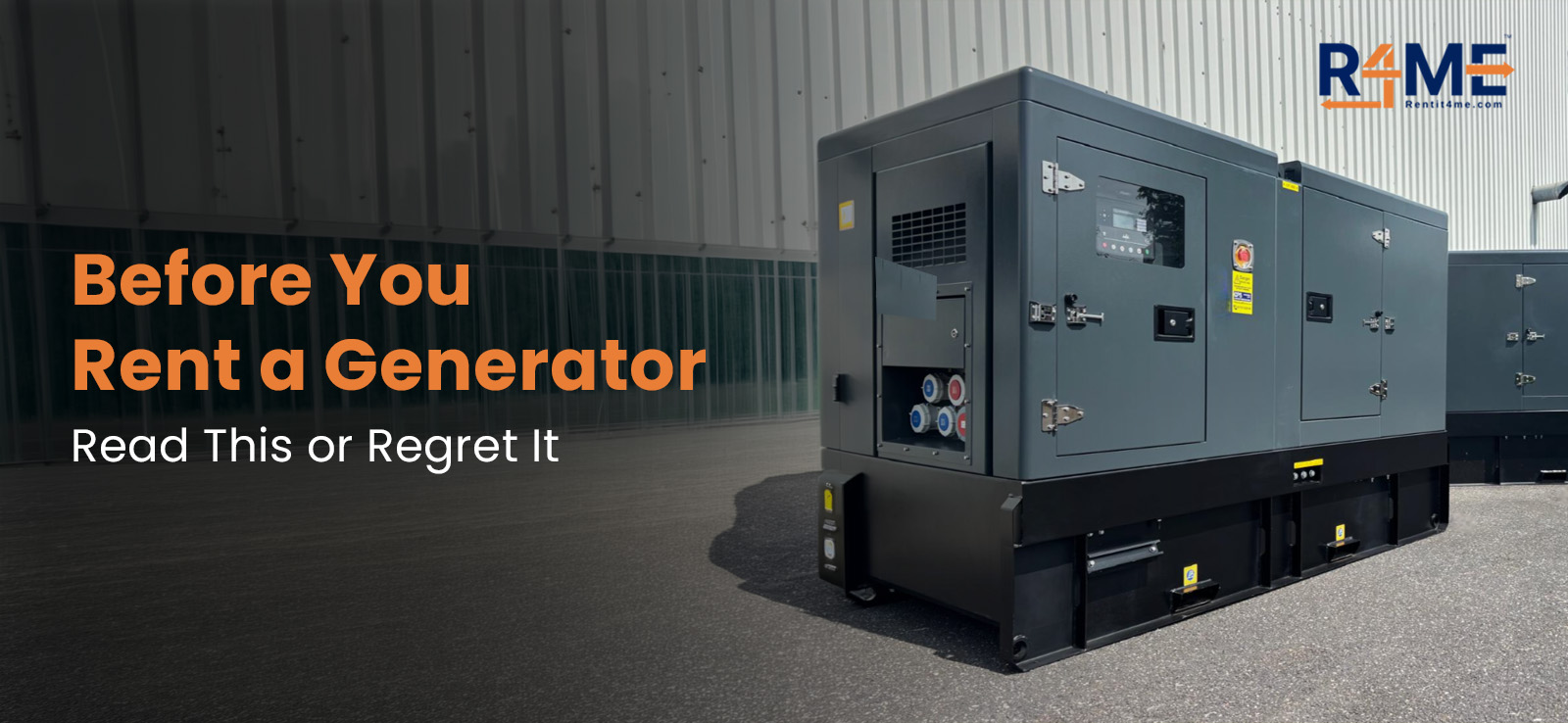
Planning an outdoor event? Preparing for storm season? Need backup power for a construction site? Before you rush to rent a generator, take a moment to read this guide. Making the wrong choice could leave you in the dark—literally—or cost you far more than necessary.
Last summer, a homeowner rented what seemed like a powerful generator for storm preparation. When the power went out, they discovered it couldn't run their refrigerator and air conditioning simultaneously. They ended up renting a second generator at premium emergency rates, spending triple what they would have paid initially.
Don't let this happen to you.
The single biggest mistake people make is guessing their power requirements. Here's how to get it right:
Step 1: List Everything You Need to Power
Write down every device, appliance, or tool you need to run. For each item, note whether it's essential or nice-to-have.
Step 2: Find the Wattage
Check the label on each device for its wattage. If you only see amps, multiply amps × volts (usually 120V for household items) to get watts.
Step 3: Account for Starting Watts
This is critical. Many appliances need 2-3 times more power to start than to run. A refrigerator that runs on 700 watts might need 2,200 watts to start. Your generator must handle these surge requirements.
Step 4: Add It All Up
Total your running watts and identify your highest starting wattage requirement. Your generator needs to exceed both numbers.
Small events/camping: 1,000-2,000 watts (phones, laptop, small fridge, lights)
Home backup (essentials): 3,000-5,000 watts (refrigerator, lights, TV, fans)
Whole house backup: 7,000-10,000+ watts (HVAC, well pump, major appliances)
Construction site: 5,000-15,000+ watts (power tools, compressors, lighting)
Generators come in several fuel types, each with distinct advantages and drawbacks.
Pros: Widely available fuel, typically lower rental cost, easy to operate
Cons: Shorter run time per tank, fuel goes bad quickly (30-90 days), noisy
Best for: Short-term use, events, weekend projects
Pros: More fuel-efficient, longer lifespan, better for continuous use, fuel stores longer
Cons: Higher rental cost, louder than inverter models, heavier
Best for: Construction sites, extended outages, commercial applications
Pros: Clean burning, fuel stores indefinitely, quieter operation, can connect to home propane Cons: Less efficient than gasoline, more expensive to run, larger fuel storage needed
Best for: Long-term backup, areas with propane infrastructure
Pros: Ultra-quiet, fuel-efficient, clean power for sensitive electronics, lightweight
Cons: Lower power output, higher rental cost
Best for: Camping, outdoor events, powering computers and medical equipment
You've probably never thought about generator noise levels until you're trying to sleep next to one at 2 AM during a power outage, or your neighbors start complaining during your backyard wedding.
Generator noise is measured in decibels (dB):
50-60 dB: Inverter generators (normal conversation level)
60-70 dB: Mid-size portable generators (vacuum cleaner level)
70-80 dB: Large portable generators (busy traffic level)
80-90 dB: Industrial generators (lawnmower level)
Pro tip: If noise matters, rent an inverter generator or ask about acoustic enclosures. Some rental companies offer sound-dampening options that reduce noise by 10-20 decibels.
That "10-hour runtime" you see in the specs? That's usually at 25% load. Run your generator at full capacity and you might get 4-6 hours per tank.
Calculate your fuel needs:
Estimate how many hours per day you'll run the generator
Multiply by the number of days you need it
Divide by the runtime at your expected load
Add 25% buffer for safety
For a multi-day event or extended outage, factor in refueling logistics. Can you safely refuel on-site? Do you have proper fuel storage? Will you need jerry cans delivered?
Every year, portable generators cause dozens of deaths from carbon monoxide poisoning and countless fires. Don't become a statistic.
Never run a generator indoors—not in your garage, basement, or even with doors and windows open
Keep it at least 20 feet from your home, windows, and doors
Position exhaust away from occupied areas
Ensure proper ventilation on all sides
Never run in rain without a proper cover (electrocution risk)
Let the generator cool completely before refueling
Never store gasoline indoors or near heat sources
Use only approved fuel containers
Don't overfill the tank
Use heavy-duty, outdoor-rated extension cords (minimum 12-gauge)
Never plug a generator into a wall outlet ("backfeeding" can electrocute utility workers)
For whole-house power, hire an electrician to install a transfer switch
Keep the generator dry and grounded
Don't just grab the cheapest option. Ask these questions:
"What's included in the rental?" Clarify whether fuel, oil, extension cords, or delivery are extra.
"What's your cancellation policy?" Weather is unpredictable. Understand your options if plans change.
"Is there a maintenance fee?" Some companies charge if you return the generator without proper oil levels or cleaning.
"What happens if it breaks down?" Get clear answers on replacement policies and emergency support.
"Do you provide setup and pickup?" Large generators are heavy. Professional delivery and setup might be worth the cost.
"What kind of fuel does it use, and do you sell it?" Some specialty generators need specific fuel grades.
"Is there a tutorial or user manual?" First time using a generator? Make sure you get proper instruction.
Generator demand spikes during certain periods, driving up prices and reducing availability:
Summer wedding season (May-September)
Corporate events
Holiday outdoor events (around major holidays)
Money-saving strategy: Rent during off-peak times when possible. Book weeks in advance for peak seasons. Some companies offer discounts for weekday pickups or extended rentals.
Planning an outdoor event? Weather can make or break your generator setup.
Rain and moisture: Most generators aren't waterproof. You'll need a generator tent or canopy that provides airflow while keeping it dry. Never use a tarp directly over the generator—it blocks ventilation and creates carbon monoxide buildup.
Extreme cold: Generators can be harder to start in freezing temperatures. Ask about cold-weather models or electric start options.
Extreme heat: Generators produce heat. In summer conditions, ensure extra ventilation and shade to prevent overheating and shutdowns.
Not all generator rental companies are created equal. Watch for these warning signs:
No option to inspect the generator before rental
Unclear or absent rental terms
Poor online reviews mentioning breakdowns or poor service
Generators that look poorly maintained
Rental staff who can't answer basic technical questions
No emergency support or after-hours contact
Pressure to rent immediately without allowing time to consider
You found the perfect generator, but can you actually connect your devices?
Cord gauge matters:
For up to 50 feet: 12-gauge minimum for heavy loads
For 50-100 feet: 10-gauge recommended
For over 100 feet: 8-gauge for safety
Using an undersized cord causes voltage drop, which can damage equipment and create fire hazards. Most rental companies sell or include proper cords—don't use your indoor household extension cords.
Before you commit to a rental, confirm:
✓ You've calculated total wattage needs (running and starting) ✓ You know the runtime you need and fuel requirements ✓ You've identified a safe placement location ✓ You have proper extension cords or transfer switch setup ✓ You understand the rental terms, including fees and policies ✓ You have a backup plan if the generator fails ✓ You know how to operate the specific model safely ✓ You've checked weather forecasts if for outdoor use ✓ You've informed neighbors if required (noise consideration)
Renting a generator doesn't have to be complicated, but a little preparation prevents expensive mistakes and dangerous situations. Calculate your needs accurately, prioritize safety over savings, and choose a reputable rental company that supports you beyond just handing over the keys.
The right generator keeps your event running smoothly, your food from spoiling, or your business operating during an outage. The wrong one? That's a regret you don't want to live with.
Ready to rent the right generator the first time? Browse our selection of well-maintained, professionally serviced generators at Rentit4Me. Our team helps you calculate your exact needs and matches you with the perfect generator for your situation—no guessing, no regrets.
 Welcome to Rentit4me
