 23-Nov-2026
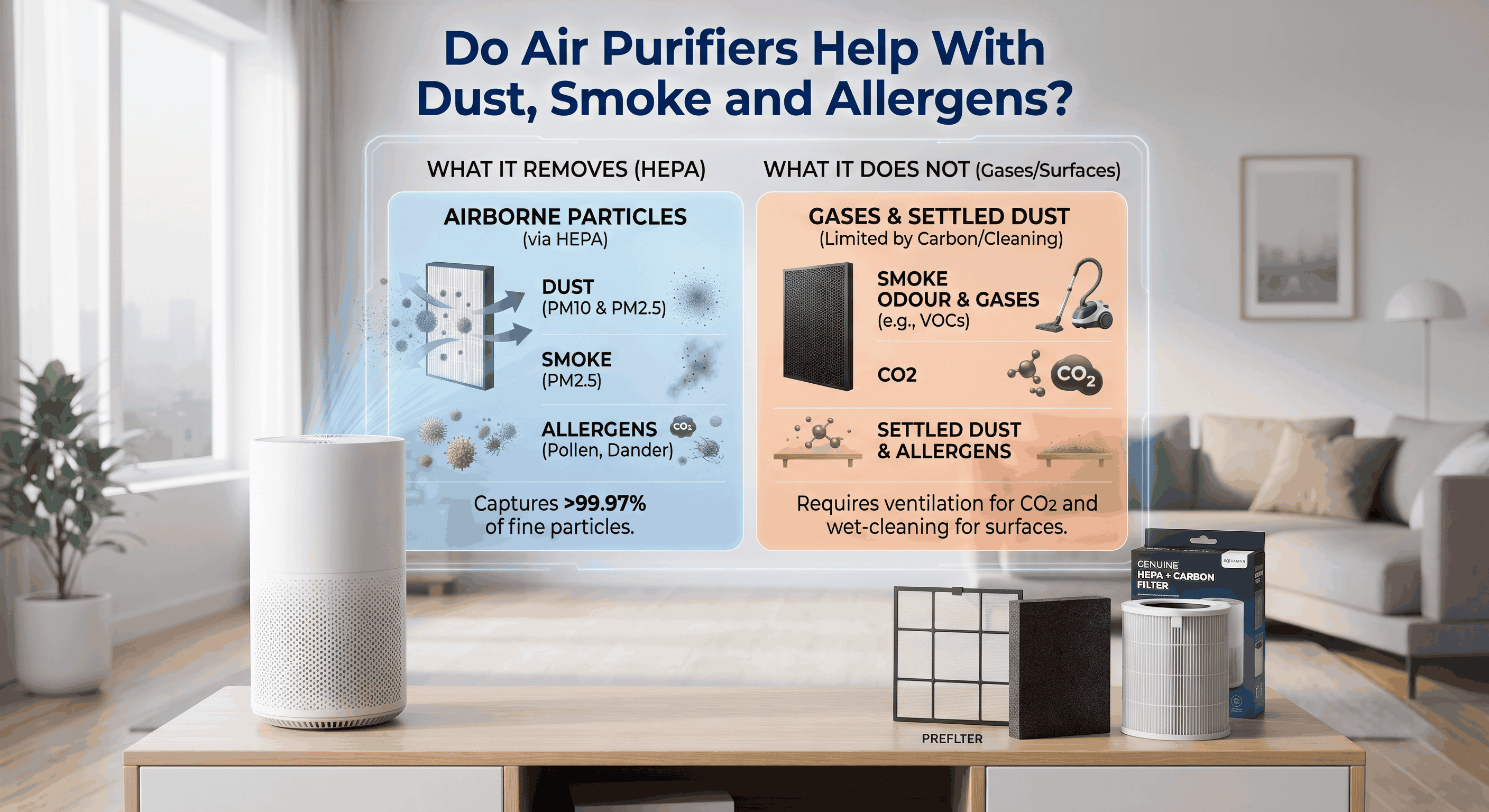
Yes, air purifiers help with airborne dust, smoke particles and many allergens when they use a HEPA filter and are sized for the room, but they do less for gases, odours and allergens that have already settled on surfaces. The result depends on the filter type, the CADR and how long the unit runs. This guide separates what a purifier does well from what it does not, with examples from Kolkata, Delhi and Ghaziabad.
Image: a table-style graphic of pollutants against filter layers. Alt text: "which air purifier filter layer handles dust, smoke particles, gases and allergens".
| Pollutant | Handled by | How well |
Airborne dust | HEPA | Well, once the particles are in the air |
Smoke particles (PM2.5) | HEPA | Well, if CADR suits the room |
Pollen and other airborne allergens | HEPA | Well for airborne particles |
Smoke odour and some gases | Activated Carbon | Partly; depends on the carbon quantity |
Settled dust and allergens | Cleaning | A purifier does not lift them from surfaces |
Carbon dioxide | Ventilation | Not removed by a purifier |
A HEPA filter graded H13 captures at least 99.95% of the most penetrating particles under EN 1822. See HEPA H13 vs H14 for the grades. Purifiers do not remove carbon dioxide, as Mosslab and Molekule note, so ventilation still matters.
A purifier clears dust that is airborne. Dust that has settled on shelves and floors needs wet cleaning, and walking or sweeping puts it back in the air. Clean the prefilter monthly, because it catches the largest dust first. Placement helps: keep the unit clear of walls and furniture.
Smoke has two parts: fine particles and gases. HEPA handles the particles. Activated carbon handles some of the gases and the smell, but it saturates over time. Guides commonly put carbon life at 3 to 6 months, and smoke-heavy periods can shorten it.
HEPA filters capture airborne pollen, dust mite fragments and similar particles. Outcomes differ from person to person, and a purifier is one measure among several. Anyone with asthma or a diagnosed allergy should ask a doctor how a purifier fits into their care. Keep windows closed on poor-AQI days and clean bedding regularly.
The WHO guideline for PM2.5 is 15 µg/m³ over 24 hours, while India's daily standard is 60 µg/m³, so even compliant days exceed the WHO figure.
Size the unit with the room-size guide, run it as set out in how often to run an air purifier and replace filters on time. The bedroom is the first room to cover; see bedroom vs living room.
Partly. Activated carbon reduces some odours, but a thin carbon layer saturates quickly.
No. It lowers airborne triggers, but it does not treat an allergy.
No. It captures airborne dust only, so surface cleaning is still needed.
No. A purifier does not remove carbon dioxide, so ventilate when outdoor air allows.
A properly sized HEPA purifier is useful against airborne dust, smoke particles and many allergens, with limits on gases and settled dust. Pair it with cleaning and ventilation. The place to start is the room where you sleep, so read how to choose between a bedroom and a living room unit.
 Welcome to Rentit4me

