 23-Aug-2024
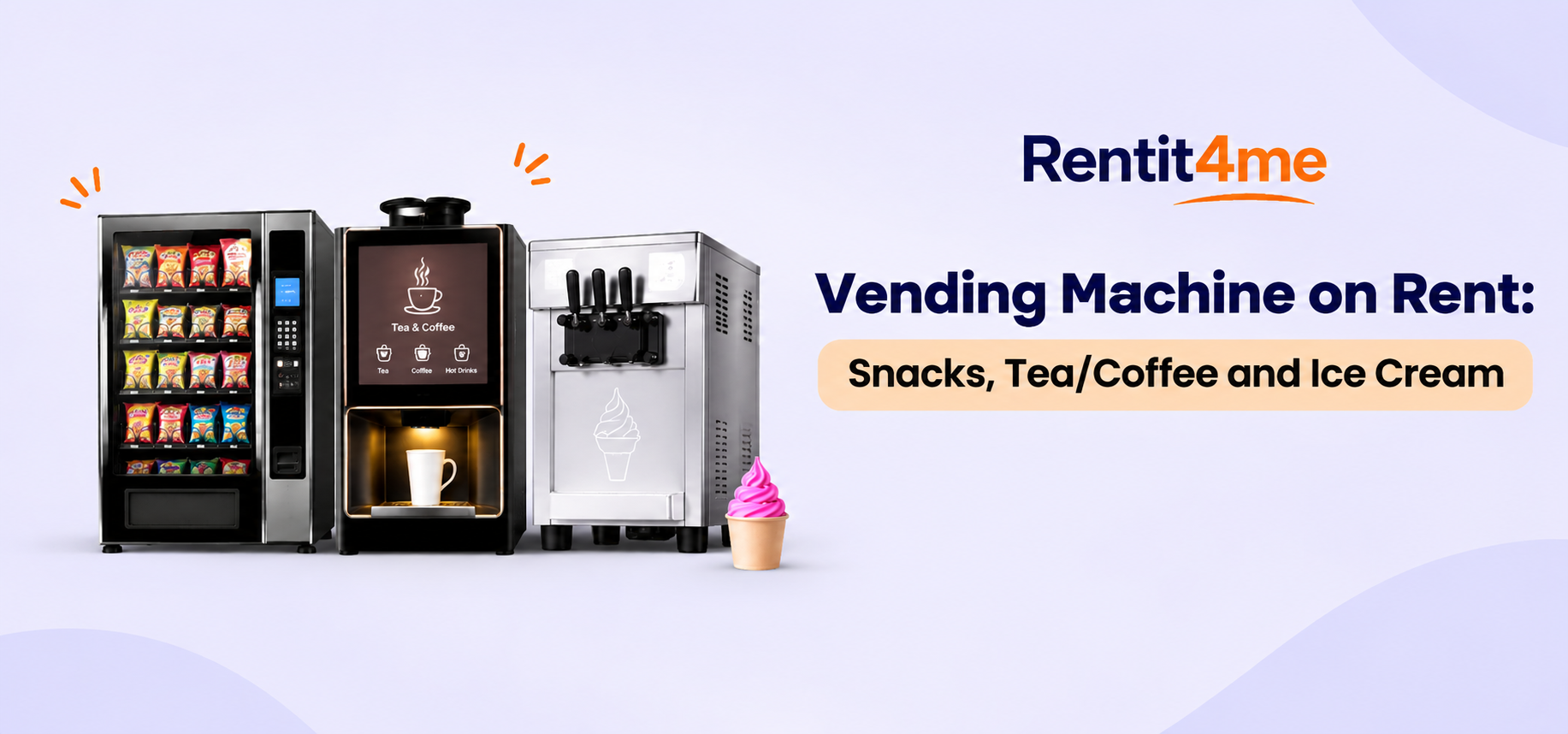
A vending machine on rent in Gurugram is a machine you use for a fixed period while the supplier handles delivery and installation, so you pay a recurring fee instead of buying the unit. This guide covers the three machine types businesses ask for most: snacks, tea and coffee, and ice cream. It also explains the steps from enquiry to installation, what moves the monthly fee, and the contract terms to settle before you sign. IMARC Group [estimates India's vending machine market] at about USD 699.5 million in 2024 and projects 4.1% annual growth through 2033.
- What a vending machine on rent in Gurugram includes
- The three machine types you can rent
- Who rents vending machines
- How the vending machine rental process works
- What affects the rental cost
- Choosing a spot for the machine
- Food safety and licensing
- Terms to confirm before you sign
- Rent or buy?
- Frequently asked questions
When you rent, the machine stays on the supplier's property. You use it for an agreed period, usually with delivery and installation covered, and you return it or renew when the term ends. Beyond that, packages differ a lot, and two quotes that look alike on price can offer very different things.
Three items decide what a deal is really worth. The first is servicing: some suppliers include repairs and replacement parts, while others bill each visit. The second is stock, meaning who buys and loads the snacks, premix, cups or ice cream mix. The third is food-safety paperwork, which gets its own section below.
It helps to sort offers into two models. A machine-only rental gives you the equipment, and your team handles everything else. A managed arrangement adds refilling and cleaning by the supplier. Managed costs more each month, but it removes a recurring chore from your facilities or admin staff. Neither is better in general. It depends on who in your building has the time.
Ask each supplier to quote the same four lines separately: machine, delivery and installation, servicing, and stock. Once the quotes share a format, comparing them takes minutes instead of an afternoon.
Rentit4me lists three kinds of machine in this category: snacks, tea and coffee, and ice cream. They solve different problems, so the table below compares what each one serves and what it asks of you.

A snack vending machine on rent is the lowest-effort option. Packaged goods keep for weeks, nothing gets cooked, and a refill means loading slots. Your main decision is the product mix. Offices often start with a spread of salty, sweet and lighter choices, then drop the slow sellers after a few weeks of sales data.
Payment matters more than most buyers expect. UPI is a standard way to pay for small purchases in India, so a machine that takes only coins and notes will probably sit half-used. Look for UPI and card support, plus remote stock monitoring, which tells the person refilling when a slot runs empty. Indian suppliers now commonly sell machines with both features.
A tea coffee vending machine on rent is the usual pick for offices without a canteen. The first choice to make is premix or fresh milk.

Premix machines mix hot water with a ready powder that already contains tea or coffee, sugar and creamer. They are quick and consistent. Nestlé Professional's guide for Indian offices suggests instant or premix units for teams of 10 to 30 people and premix for heavy daily use, with some models handling around 300 cups a day. Godrej sells premix machines in two to six lanes, so one unit can serve chai, coffee and other drinks.
Fresh milk machines draw from a chilled milk supply and can make cappuccino and latte-style drinks. Godrej says select models handle this. The cup tastes closer to a cafe's, but milk adds to the cleaning workload compared with powder.
An ice cream machine on rent suits cafes, hotel dessert counters, resorts and events that want a soft serve line. Of the three types, it demands the most discipline, because the mix is dairy.
Cleaning routines depend on the model. Taylor, a commercial soft serve manufacturer, says a daily routine includes rinsing, running the cleaning cycle and disassembling key parts. A model with a heat-treatment cycle can run up to 28 days between full strip-downs. Before you rent, ask which kind the unit is and who does the nightly work.
Businesses are the main users. Offices and co-working spaces use tea, coffee and snack machines to give staff something between meetings without running a canteen. For a team of thirty, a premix machine in the pantry can replace a daily chai order and the person who collects it.
Hotels and resorts place machines on guest floors, near lobbies and in staff dining areas, so people can get something when the kitchen is closed. A resort can add an ice cream machine to a poolside counter for the season and send it back afterwards. That is hard to do with a machine you own.
Cafes, restaurants and event organisers rent soft serve and beverage machines for launches, weddings and exhibitions. A short rental avoids owning equipment that then sits in storage for most of the year.
Individuals make up a smaller group: a family function, a housewarming, a college fest. The logic is the same. The terms are just shorter.
Every supplier runs it a little differently, but the sequence is usually this:

1. Share the site details: Tell the supplier where the machine will stand, how many people will use it, and whether the spot is indoors, near a power point and reachable by lift.
2. Pick the machine type and term: Match the machine to the need, then choose a rental period. Offices often think in months or years, while events think in days.
3. Compare itemised quotes: Look at machine, delivery, servicing and stock as separate lines.
4. Sign the agreement: Pay any deposit the agreement asks for, and keep a copy of the signed terms.
5. Delivery and installation: The supplier brings the machine in, connects it and runs a test. Check that payment, cooling or heating all work before the team leaves.
6. Use, refill, service: Stock is refilled by your staff or by the supplier, depending on the model you chose. Service visits follow the schedule in the agreement.
7. Return or renew: At the end of the term, the supplier collects the machine or extends the contract.
Our full guide to renting vending machines walks through each step in more detail. The short version: the process is simple, and most problems come from skipping step 3.
No single price covers every vending machine on rent. The monthly fee moves with five things.
Machine type and capacity come first. A compact premix unit costs the supplier far less to buy than a refrigerated snack machine with a touchscreen, and rental fees follow that gap.
For scale, look at seller listings on IndiaMART. Small premix tea and coffee units start at about ₹8,000 to ₹15,000. Fresh-milk models run from roughly ₹55,000 to over ₹2 lakh, and snack and beverage machines with UPI support sit around ₹1.5 lakh to ₹2.3 lakh. Those are purchase prices from sellers, not rental rates. They do explain why a snack machine and a basic chai machine will not carry similar monthly fees.
Term length comes second. Longer commitments often earn a lower monthly rate, while short event rentals are usually priced on their own. Service level is third: managed arrangements cost more than machine-only ones. Fourth, features such as UPI and remote stock tracking add to what the supplier has invested in the machine. Last, logistics count. Delivery distance, floor, lift access and installation effort can change the one-time charge.
Ask about the deposit separately. A refundable deposit and a non-refundable setup fee are different things, and the agreement should say which is which.
A good location matters more than a good machine. Walk the site with this checklist before you order:
- Power: A working socket within reach, so no extension cords across walkways.
- Space and airflow: Machines give off heat from their cooling or heating systems, so leave clearance around the back and sides.
- Water: Hot beverage units typically need a water source, either a tank you refill or a connection. Ask which the model uses.
- Access: Measure doors, lifts and corridors. In large office complexes in Gurugram, building managers often set vendor entry rules and service-lift timings, so raise the delivery with facilities early.
- Footfall: Put the machine where people already pass or wait, such as near the pantry, the reception or the lift lobby, not in a corner they have to find.
If you are placing a vending machine on rent in Gurugram for a hotel or resort, add guest privacy and noise to the list. A machine next to a guest room door rarely goes down well at 2 a.m.
Serving food or drink through a vending machine counts as a food business activity in India. FSSAI, the national food regulator, requires food business operators that deal with vending machines to hold a registration or licence. Which tier applies (basic registration, state licence or central licence) depends on turnover and scale.
With a rental, the question is who holds it. If you sell items to staff or guests, you are probably the operator. If the supplier runs the machine and sells the product, the supplier may hold the licence. Do not guess. Ask for the licence number, check that it is current, and write down who is responsible in the agreement. For anything unclear, the FSSAI website is the place to confirm.
Hygiene is the other half. Agree on a cleaning schedule, who performs it, and how expiry dates on stock are checked. A machine that looks tidy but dispenses stale stock reflects on your office or hotel, not on the supplier.
Read the agreement line by line. These seven points cause most disputes:
1. Term and minimum commitment: How long you are locked in, and what an early exit costs.
2. Deposit: The amount, and the conditions for getting it back.
3. Service and repair: What is covered, how fast the supplier responds, and whether a replacement machine is provided during repairs.
4. Stock and consumables: Who buys, who loads, and who pays.
5. Damage and misuse: Where normal wear ends and chargeable damage begins.
6. Relocation: Whether you can move the machine within the building, and who pays if it has to move.
7. Payments and sales: If you charge users, who receives the money and how it is reported.
This is a summary. The full ten-point checklist covers the rest.
Renting is easier to justify when you are unsure how much the machine will be used. It also fits a limited period, or a team with nobody to take on refills and servicing. Buying starts to look better when demand is steady, the machine will stay in place for years and you have someone to run it.
The break-even point depends on the machine, the monthly fee and how long you will keep it. A single office vending machine that stays in use for three or four years can tip the maths one way, while a seasonal poolside unit tips it the other. The article on rent vs buy vending machine costs rent-vs-buy-vending-machine works through the arithmetic with an example.
It depends on machine type, rental term, service level and features such as UPI. A basic premix tea and coffee unit and a refrigerated snack machine have very different purchase prices, so their rental fees differ too. Ask for an itemised quote covering machine, delivery, servicing and stock, and compare suppliers on the same four lines.
Some suppliers offer short rentals for events such as weddings, exhibitions and launches, and others set a minimum term of a month or more. Minimum periods vary. Confirm the shortest term available for the machine you want, along with delivery and pickup charges.
That depends on the agreement. In a machine-only rental, your team buys and loads the stock. In a managed arrangement, the supplier refills and cleans on a schedule. Check which model your quote assumes before you compare prices.
Food vending falls under FSSAI rules, which require registration or a licence from food business operators. Who holds it in a rental depends on who runs the machine and sells the product. Ask the supplier for its licence number and agree on responsibility in writing.
Many modern machines do, but not every model. Confirm UPI and card support for the specific unit before you sign. Older machines may need a new control board to take digital payments, and one Indian supplier puts that upgrade at ₹15,000 to ₹40,000 on a purchased machine, so check it is already built in.
A vending machine on rent in Gurugram is easiest to judge when you split the decision into three questions. What should the machine serve? Who will run it day to day? And what does the paperwork say?
Snacks suit low-effort setups, tea and coffee fit offices without a canteen, and ice cream works for cafes, hotels and events that can handle daily cleaning. For all three, the details that matter sit outside the machine itself: servicing, stock, licensing and exit terms. Suppliers that quote these as separate lines are easier to compare and easier to hold to their word.
Visit the site before you decide, measure the access route and check the power point. Ask who holds the food licence. Then read the contract slowly. A few minutes on those points usually saves more trouble than any difference in the monthly fee.
When you are ready to compare suppliers, start with the ten terms in our vending machine rental agreement checklist.
- IMARC Group, India Vending Machines Market, (USD 699.5 million in 2024; 4.10% CAGR 2025-2033)
- Nestlé Professional India, Coffee Vending Machines for Indian Offices
- Godrej Enterprises Group, Vending Machines
- Taylor Company, soft serve cleaning and service guidance,
 Welcome to Rentit4me

