 05-Nov-2026
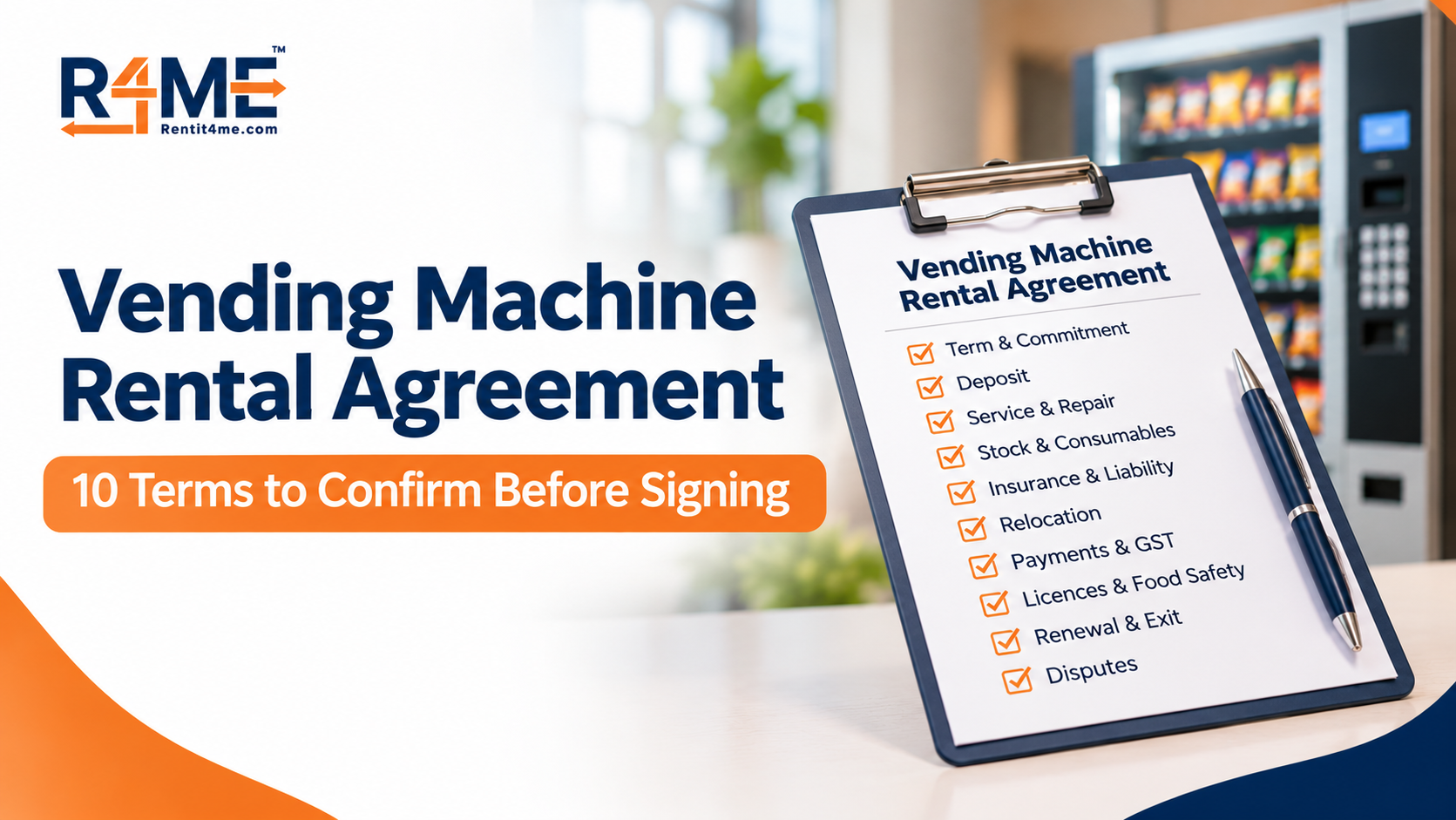
A vending machine rental agreement should state the rental term, deposit, servicing duties, stock responsibility, damage and liability rules, licensing and exit terms in writing, so neither side relies on verbal promises. This post goes through ten terms in the order they usually matter, with one question to ask for each. It draws on vending-industry contract guides and general rental guidance, and it is general information, not legal advice.
Picture a snack machine that jams at 4 p.m. on a Friday. Who do you call, how fast does someone come, and who pays for the part? A good supplier answers all three in a sentence. A written agreement makes sure the answer is still the same six months later, when the person who made the promise has moved on.
Two quotes can look alike on price and read very differently on paper. If you have not yet compared them line by line, start with our rent vs buy breakdown and ask each supplier to itemise machine, delivery, servicing and stock. Then use the ten terms below to read the contract.
Look for the start date, the length of the term and the earliest date you can leave. Longer commitments often come with lower monthly rates, but they also lock you in if usage disappoints. If the contract renews by itself, note the last date on which you can say no.
Ask: what does early termination cost, in months of rent or a flat fee?
The agreement should name the security deposit amount, say whether it is refundable and list the conditions for getting it back. General rental guidance advises writing down both. Keep it apart from any set-up or installation fee, which is a different charge and may not come back.
Ask: how many days after pick-up is the deposit returned, and what can be deducted?
Check whether servicing is included, who does the repairs and who pays for parts. Vending contract guides say a service level agreement can set repair response times, restocking frequency and cleanliness standards. Look for a response time written in hours or days, and for a replacement machine while yours is being fixed.
Ask: who do I call, and how fast will someone arrive?
Settle who buys the stock, who loads it and who pays. In a machine-only rental that falls on your team. In a managed arrangement the supplier usually refills and cleans. If the supplier refills, find out how often, and what happens when a slot runs empty before the next visit.
Ask: who is responsible for stock that expires inside the machine?
Draw a clear line between normal wear and chargeable damage. A vending lease guide advises checking whether the agreement covers theft, vandalism and natural disasters, and warns that you may need separate insurance if it does not.
Ask: am I expected to insure the machine, and for what value?
Machines are heavy and connect to power, and sometimes to water. An unplanned move can cause damage and arguments about who pays. Agree in advance whether a move needs written consent, who carries it out and who bears the cost if the building forces it.
Ask: can I move the machine inside the premises, and who pays?
Check the monthly rent, the due date and any late payment penalty. Add up rent, deposit, service fees and consumables for the full term to see the real total. On tax, a tax-software page lists machinery rental under SAC 997319 at 12% or 18%, without saying when each rate applies. Rates change, so ask the supplier to state the rate and show GST on the invoice.
If you charge staff or guests, also settle who receives the sales money. In a revenue-share model, the location receives a percentage of sales instead of paying a flat rent.
Ask: what is the total monthly cost, including GST?
Food vending in India falls under FSSAI, which requires registration or a licence from food business operators dealing with vending machines. The agreement should say who holds it, who is responsible for hygiene and expiry checks, and how a food-safety complaint is handled. For dairy products such as soft serve, ask about cleaning duties too, as explained in our ice cream machine on rent guide for cafes and events.
Ask: what is your licence number, and does it cover this machine at my site?
Define the notice each side must give to end or renew the term, what counts as a breach and what happens next. Vending contract guides also cover how the machine is removed and how final accounts are settled.
Ask: how many days' notice do I need, and who collects the machine and when?
If someone is hurt by a faulty machine, the indemnity clause decides who answers for it. Guides suggest each party should carry suitable cover, such as general liability insurance. Check which court or arbitrator would handle a dispute. Stamp duty on agreements varies from state to state, so ask a lawyer whether yours needs stamping or registration.
Ask: who is liable if a customer is injured or falls ill, and what insurance applies?
No response time for repairs, only "we will send someone".
Deposit conditions described as "as per policy".
Automatic renewal buried in the small print.
A supplier who will not share its FSSAI licence number.
"Everything included" with no itemised list.
Verbal promises that never reach the document.
Yes, ask for one. A written agreement records the term, deposit, servicing and exit rules, so nothing depends on memory. For a short event rental, a one-page agreement may be enough. For longer terms, ask a lawyer whether stamp duty or registration applies where you are.
It depends on what the agreement says. Look for the amount, the conditions for return and the number of days the supplier has to refund it. Keep the deposit separate from set-up or installation fees, because those are usually charged differently.
Renting out machinery is a taxable service in India, and a tax-software listing places it under SAC 997319 with a rate of 12% or 18%. The right rate depends on the facts, so ask the supplier to state it on the quote and invoice, and confirm with your tax adviser.
For a short event rental, careful reading may be enough. For a multi-year term, several machines or a large deposit, a lawyer's review is worth the cost. A lawyer can check liability, stamp duty and dispute clauses that a general checklist cannot cover.
A vending machine rental agreement protects both sides when something goes wrong, not when everything runs well. Read it for the ten terms above, ask the suppliers to put every promise in writing and walk away from anyone who will not. If the deal is large or long, have a lawyer read it first.
A few extra days spent on the paperwork cost far less than a dispute over a deposit or a machine that nobody will repair. When you are ready to compare suppliers, start with our complete guide to renting a vending machine in Gurugram.
Sources
 Welcome to Rentit4me

