 05-Nov-2026
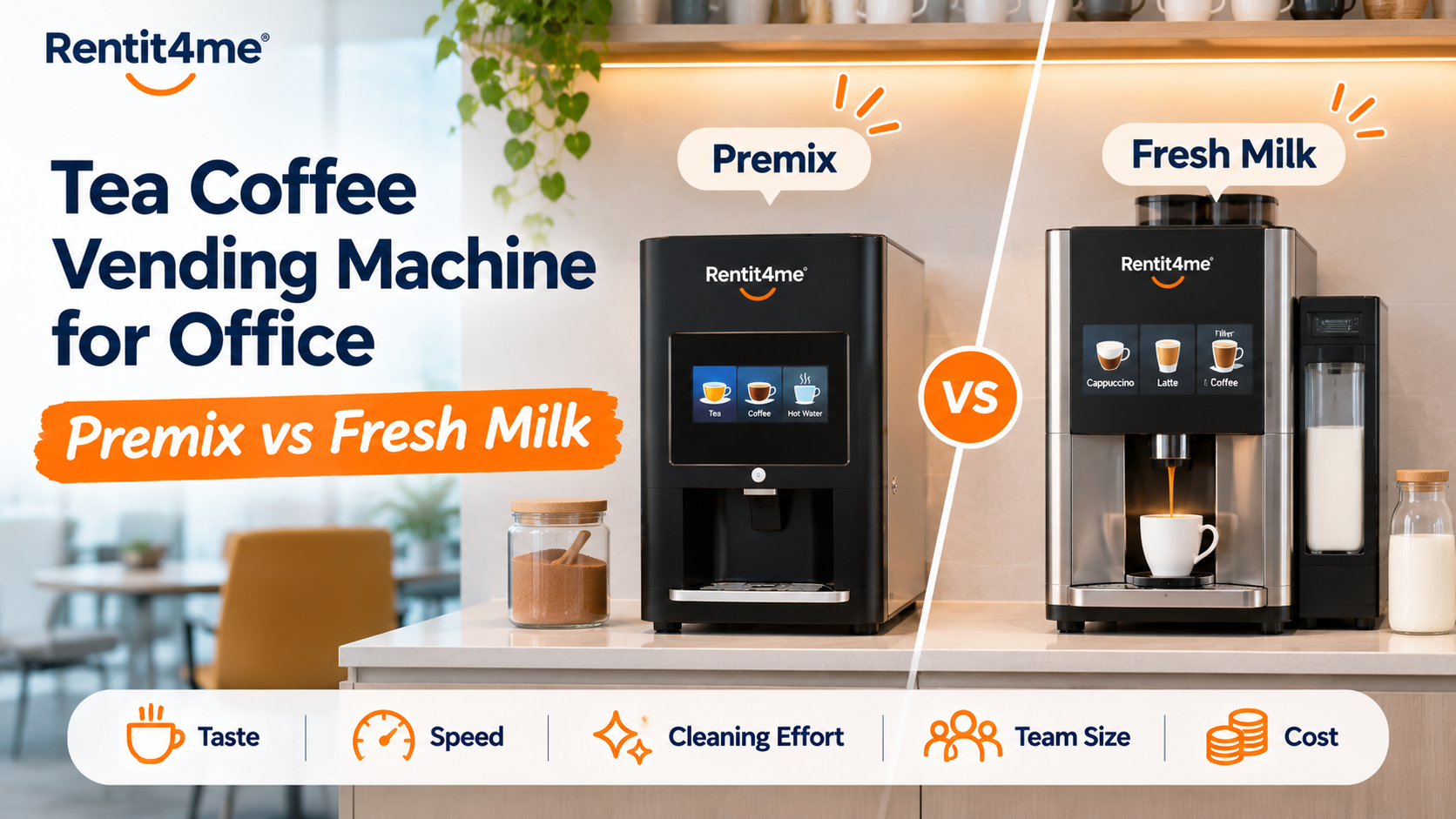
Premix machines suit offices that want speed, low upkeep and a consistent cup, while fresh milk machines suit offices that want café-style drinks and can handle a stricter cleaning routine. For a tea coffee vending machine for office use, the choice mostly turns on team size, drink expectations and who will own the cleaning. This post compares the two on taste, speed, upkeep, space and cost, then gives a quick way to choose.
A premix machine mixes hot water with a ready powder. The powder already contains tea or coffee, sugar and creamer, so the machine only has to measure, mix and dispense. Godrej, for example, lists premixes such as masala, ginger, cardamom and lemon tea, plus coffee premix and instant coffee.
A fresh milk machine works differently. It draws milk from a chilled supply and combines it with tea, coffee or chocolate. Godrej names the Quanto, FBT100 and Contento as models built to handle fresh milk, and lists cappuccino, café latte, filter coffee, hot chocolate and flavoured milk drinks among the options.
Both types suit an office tea coffee machine setup. They just ask different things from the people who run them.
Nestlé's figures describe its own premix range, so read them as a guide, not a guarantee for every machine.
Fresh milk wins on the cup. A UK coffee equipment supplier compared the two types and concluded that fresh milk gives the better drink for lattes and flat whites. Even good powdered milk, it says, does not quite match it. Taste is subjective, so test before you decide, and ask the supplier for a sample cup if you can.
Premix has its own strength: consistency. Every cup comes out the same, and Indian favourites such as masala chai and ginger tea are on Godrej's list of standard premixes. If your team wants a predictable chai at 4 p.m., premix covers it.
Queues build at predictable times, so size the machine for the rush, not the average. Say thirty people reach the machine within ten minutes. At 2 cups a minute, the last person waits about fifteen minutes. At 5 cups a minute, it takes six.
That gap is why premix suits busy pantries. Nestlé's guide places premix in the 200 to 300 cups a day band, against up to 200 for bean-to-cup machines. If your pantry is busy, choose speed first. Our post on office vending machine setup and footfall shows how to estimate your peak.
This is where the two types differ most. The same supplier comparison says fresh milk machines are generally harder to keep clean, because hygiene matters more with milk and small frother parts stop producing good foam when dirty. Premium models can guide staff through cleaning on screen, while cheaper ones need more parts taken apart by hand. Powdered milk machines still need their mixing parts rinsed, but the overall effort is lower.
Whichever type you pick, settle three questions before installation:
Who cleans the machine, and how often?
Who checks stock expiry dates?
Who restocks, and who pays?
In a managed rental, the supplier may take on some of this. In a machine-only rental, your facilities team does. Our hub page on renting vending machines in Gurugram explains the difference.
Premix machines can be compact. Godrej lists the Ecostar at 620 × 300 × 360 mm and 1.8 kW, and describes compact models for startups, clinics, receptions and small pantries. A fresh milk setup needs room for milk storage as well, so check the dimensions and the power load with the supplier.
On cost, seller listings on IndiaMART put small premix tea and coffee units at about ₹8,000 to ₹15,000, while fresh milk models run from roughly ₹55,000 to over ₹2 lakh. These are purchase prices, not rental rates, but they suggest why a fresh milk machine will likely cost more to rent. Consumables differ too: milk adds to the running cost per cup.
Use these pointers as a starting point:
A team of 10 to 30: Nestlé suggests instant or premix machines for offices this size. A compact premix unit is usually enough.
A busy pantry with heavy daily use: Premix. It handles the highest volume of the types Nestlé compares.
A reception or client floor: Fresh milk, if you want visitors to get a café-style drink and someone owns the cleaning.
No one to clean daily: Premix, or a managed rental where the supplier handles upkeep.
Unsure: Start with premix on a short term, watch how it is used, then move up. A rental makes that switch easier than a purchase does, as our rent vs buy comparison explains.
Premix, in most cases. It is compact, quick and easy to maintain. Nestlé Professional's guide recommends instant or premix units for offices of 10 to 30 people. Fresh milk machines work for small offices too, but only if someone owns the stricter cleaning routine.
Nestlé's guide places premix machines in a range of about 200 to 300 cups a day. Actual capacity depends on the model, canister sizes and how often staff refill them, so confirm the figure for the specific machine you plan to rent.
Usually, yes. Milk adds a consumable that needs cold storage, and cleaning takes more time. The machine itself also tends to cost more. Ask the supplier for a per-month figure that covers servicing and cleaning supplies, not just the machine.
It depends on the supplier and the agreement. Ask whether swaps are allowed mid-term, what they cost and whether the supplier carries the models you want.
The right tea coffee vending machine for office use comes down to three things: how many people use it at peak, what kind of cup they expect, and who will clean it. Premix wins on speed, volume and low upkeep. Fresh milk wins on taste and menu range, at the price of more cleaning and a higher cost.
Sources
 Welcome to Rentit4me

