 05-Nov-2026
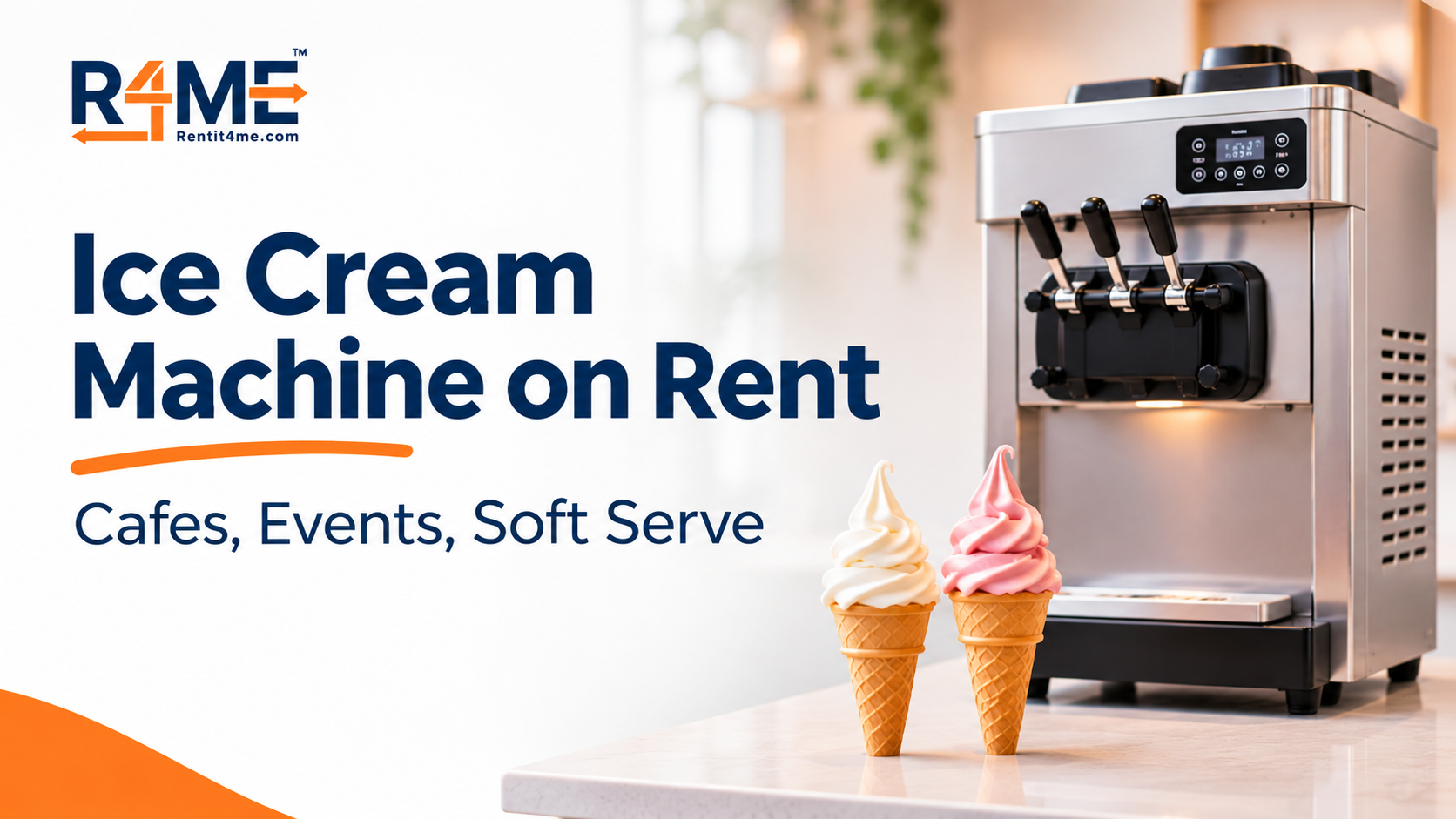
An ice cream machine on rent lets a cafe or event host serve soft serve for a set period without buying a unit that lists at roughly ₹90,000 to ₹2 lakh. This post covers who benefits, table-top versus freestanding machines, power and cleaning needs, and what to ask a supplier before signing. The cleaning guidance draws on a Taylor service guide and a state food-safety factsheet.
A soft serve machine chills and churns liquid mix inside a freezing cylinder at the same time, which is why the result comes out light and smooth instead of hard enough to scoop. The mix waits in a hopper and feeds into the cylinder as the machine dispenses. Because that mix is dairy, the machine behaves less like a beverage dispenser and more like a small food-processing unit, with stricter temperature and cleaning needs than a tea or snack machine.
Cafes rent a machine to test a soft serve counter before spending on a purchase. If the counter sells well through the summer, they buy or extend the term. If it does not, the machine goes back and nothing is left in the storeroom.
Event hosts rent for the days they need it: weddings, exhibitions, college fests and corporate launches. Hotels and resorts add a machine to a poolside or buffet counter for peak season. Individuals planning a large house party do the same on a smaller scale. The common thread is a fixed need and no wish to store a machine afterwards. For the wider picture on terms and costs, see our guide to renting a vending machine in Gurugram.
Seller listings show the range. A table-top unit fits a cafe counter and holds a small tank. A freestanding unit holds more mix, can serve two flavours or a twist, and needs floor space and more power.
These are purchase prices from sellers, not rental rates, and the listings leave out details such as voltage. Use them to compare size and power, not to guess a fee. A table-top unit suits a cafe counter or a small gathering. A freestanding two-hopper unit suits a crowd, because it holds more mix and serves a twist.
Listings in the table run from 1,800 W to 2,500 W on a single phase supply. Ask the supplier for the exact rated load and plug type, then check that the socket and circuit can carry it. A US equipment guide notes that most full-size soft serve machines need electrician-installed wiring and not a standard outlet, so do not assume any wall point will do.
At an event, avoid an extension lead shared with lights and speakers. Ask the venue about a dedicated supply, or the rating of the generator. Leave airflow around the machine, and keep a sink or wash area close by, since the parts come out for cleaning.
Soft serve runs on a mix prepared to the maker's instructions, and temperature matters. Vermont's agriculture department says the mix should be stored at 40°F (about 4°C) or lower and used before its date code. A manual for one commercial machine, the Kolice ICM-370S-2, lists a runny result when the mix is not cold enough and gives about 15 minutes for the freezing cycle. At an event, that means setting up well before the first guest, not as guests arrive.
Leftover mix is the other concern. The same Vermont factsheet calls holdover mix one of the major sources of bacterial contamination in soft serve operations. For a one-day event, order mix in line with the headcount, not a "just in case" surplus.
A simple estimate: servings needed equal guests multiplied by the share who take dessert, multiplied by servings each. As a hypothetical example, 200 guests with 60% taking one serving gives 120 servings. These are placeholder numbers, so use your own guest list.
Then ask the supplier how many cones the machine serves in an hour, since listings quote litres. Most guests reach the counter in the same half hour, so the peak matters more than the total. If demand outruns output, a second machine or a staggered serving plan is cheaper than a long queue.
Vermont's agriculture department, writing for operators there, says a soft serve freezer should be fully disassembled, washed and sanitised every day, using dairy-type cleaners and approved sanitisers. Parts go into sanitiser for at least a minute before reassembly.
Taylor, a commercial soft serve manufacturer, describes a different route. Machines with a heat-treatment cycle run an automatic heating and cooling process each night, which stretches the gap between full strip-downs to as much as 28 days. Daily checks still apply. Standard machines need full disassembly more often.
Both sources are from outside India, where FSSAI sets the food-safety rules, so treat them as the manufacturer's practice and confirm requirements with your supplier. The practical point stands anyway. If you rent a standard machine for a cafe, someone takes it apart every day. If you rent for an event, decide who cleans it afterwards and write that into the agreement.
Machine type. Table-top or freestanding, one flavour or a twist, and whether it has a heat-treatment cycle.
Power. The rated load and plug type.
Output. Servings an hour and mix tank size, matched to your crowd.
Supplies. Who provides mix, cones and cups, and who pays for them.
Cleaning. Who cleans, how often, and who handles the strip-down after an event.
Logistics. Delivery, set-up and pick-up times, with a test run before guests arrive.
Breakdown plan. Response time, and whether a backup unit or technician is available on the day.
Licensing. Who holds the food licence. Food businesses in India fall under FSSAI, so ask for the supplier's licence number and agree responsibility in writing.
Our rental agreement checklist covers the contract terms behind these questions, such as deposit, damage and early exit.
Some suppliers offer day or weekend rentals for events, while others set a minimum term. Confirm the shortest rental available for the machine you want. Also ask about delivery and pick-up charges, and whether set-up and a test run are included before your guests arrive.
Not always. Some suppliers sell their own mix and others let you use any compatible one. Because consistency depends on the mix and its preparation, ask which product the machine is set up for. Request a test run so you can check the result before the event.
It depends on the machine. Vermont's agriculture department calls for daily disassembly and sanitising. Taylor says machines with a heat-treatment cycle can go up to 28 days between full strip-downs, with daily checks still required. Ask your supplier which type you are renting and who carries out each task.
It depends on who runs the machine and sells the ice cream. Food businesses in India fall under FSSAI rules. Ask the supplier for its licence number, confirm requirements with your own licensing contact, and agree responsibility in writing before the machine arrives.
An ice cream machine on rent works best when the need has a clear end date, whether that is one wedding or one summer of cafe trading. Match the machine to the crowd, check the power before delivery and keep the mix cold. Settle who cleans it before anyone signs.
Sources
 Welcome to Rentit4me

