 26-Nov-2026
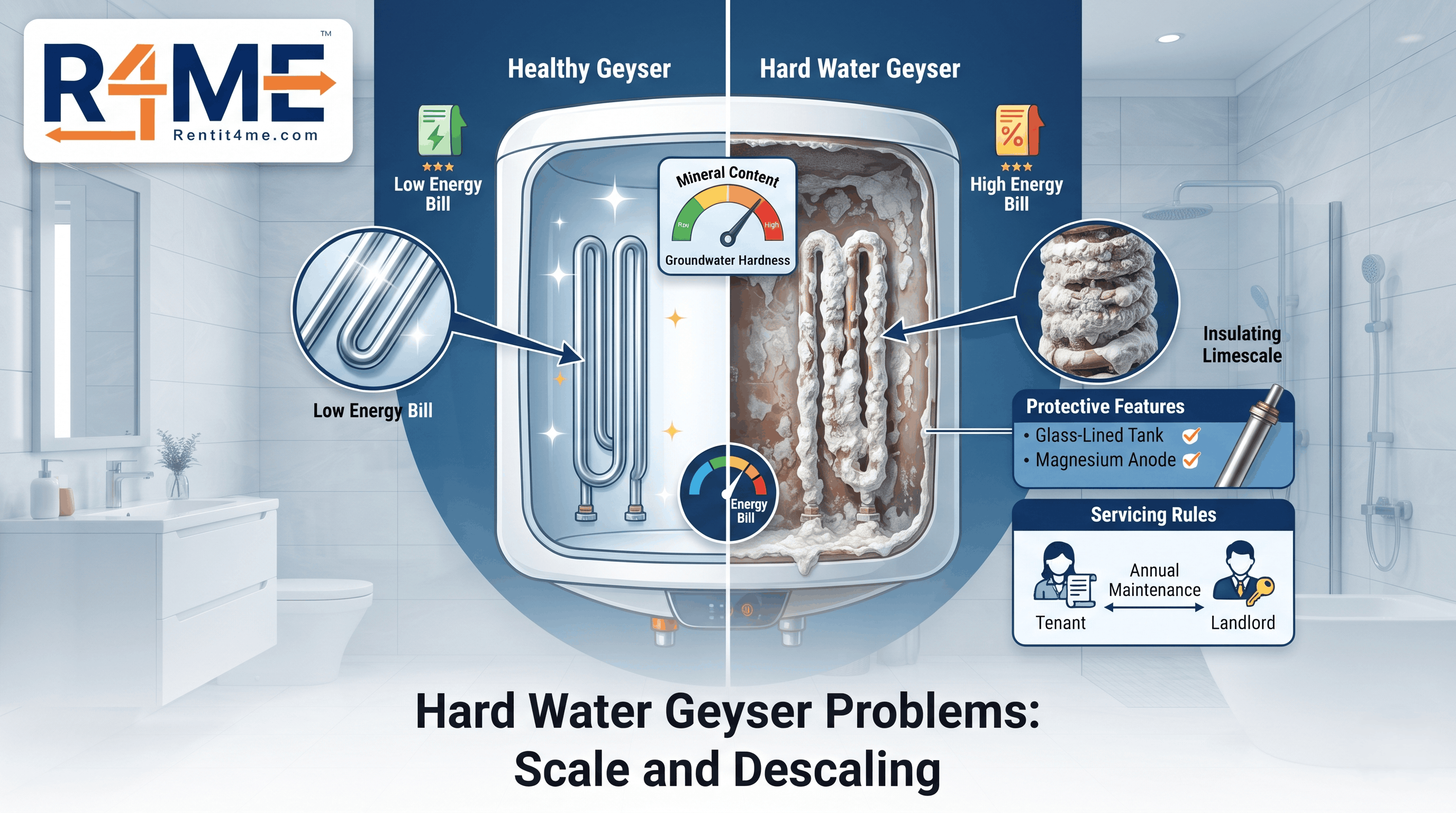
A hard water geyser develops limescale on its heating element and tank walls, which slows heating, raises electricity use and shortens the geyser's life. Descaling every six to twelve months and choosing a glass-lined tank reduce the damage. This guide explains the signs, the standards and what tenants should check.
Hard water carries dissolved calcium and magnesium. When the water is heated, these minerals leave the solution and form a hard crust on the nearest hot surface. In a geyser, that surface is the element.
The crust insulates the element, so water takes longer to warm, and power use rises because the element runs longer for the same temperature. Over time, the element can overheat and fail, and the tank loses usable capacity.
The Bureau of Indian Standards sets total hardness limits for drinking water in IS 10500. The acceptable limit is 200 milligrams per litre as calcium carbonate, and the permissible limit, where no alternative source exists, is 600 milligrams per litre. Groundwater in many areas exceeds the acceptable figure.
A simple home test is to look inside the kettle, since white crust there, or on taps and shower heads, signals that the supply is hard.
Five signs point to scale. Water takes longer to heat than it did before, and the tank makes popping or rumbling sounds. Hot water runs out sooner than it used to, the circuit breaker trips more often, and white flakes appear in the water from the tap.
Several design choices reduce the damage in a geyser that runs on hard supply. A glass-lined tank resists corrosion and is easier to clean. A magnesium anode is a sacrificial rod that corrodes instead of the tank, and it needs replacing every few years in hard water. A coated or incoloy element resists crust better than plain copper.
Temperature matters as well. A thermostat set around 55 to 60°C slows scale formation, because higher settings speed it up.
In hard-water areas, a service every six to twelve months is a sensible schedule. A technician drains the tank, cleans the element and checks the anode. Do not pour acids or harsh chemicals into a geyser yourself, because the tank lining can be damaged and the warranty may be voided as a result.
A water softener at the inlet protects the geyser, taps and pipes, but it is usually the landlord's decision.
Many parts of the NCR and Rajasthan report hard groundwater, so tenants there should ask three questions. Is the tank glass-lined? When was the anode last checked? Does the rental include a servicing visit? Tenants in Delhi, Gurugram, Faridabad, Ghaziabad and Jaipur can raise these points when comparing plans.
A few simple tests give a rough idea of hardness. White crust on the kettle, taps and shower heads suggests hard water. Soap that lathers poorly and leaves a film points the same way. For a firmer answer, a basic test strip or a lab test gives a reading in milligrams per litre.
Compare the reading with the limits in the standard. If the figure is above the acceptable limit, plan for scale. Also ask neighbours and the housing society, since the same supply often serves the whole building.
Scale is a poor conductor of heat, so even a thin layer on the element makes the element work harder to warm the same water. The geyser runs longer, and the bill rises. In addition, the element runs hotter than it should, which shortens its life.
The effect builds quietly. A geyser that heated a tank in thirty minutes last winter may take noticeably longer this year. Therefore, treat slow heating as a signal, not as a quirk of the weather.
A proper service involves more than a quick rinse. The technician should switch off and isolate the unit, drain the tank and remove the element for cleaning. Next, the technician should check the anode and replace it if it has thinned. Then the technician should inspect the seals, the valve and the thermostat.
Ask for a note of what was done and the date. Keep it with the rental or purchase papers so that the next visit can be planned.
A softener at the inlet reduces hardness for the whole home, and it protects taps, pipes and appliances as well as the geyser. However, it needs space, regular salt or resin care and the landlord's consent, so it suits long stays better than short ones.
A smaller in-line filter or scale inhibitor at the geyser inlet is simpler, but its effect varies. Ask for the maintenance schedule before you rely on either, because a neglected filter stops working.
Responsibility depends on the agreement. In many tenancies, the landlord owns fixed fittings and the tenant owns appliances brought in. For a rented geyser, the provider usually services the unit, but scale caused by hard water may count as normal wear or as a service item, depending on the plan.
Therefore, ask in writing who arranges descaling and how often. Agree what happens if the element fails because of scale.
Pouring acid or strong cleaners into the tank damages the lining. Setting the thermostat very high speeds up scale and wastes energy. Running the tank empty burns the element. Ignoring a leaking valve lets minerals build up around it.
Each of these habits is easy to avoid, and avoiding them often matters more than the choice of model.
In hard-water areas, every six to twelve months is a sensible interval. Slow heating, noise from the tank and rising electricity use are signs that descaling is overdue. A technician should do the work, because the tank lining and anode need checking.
Yes. Limescale insulates the element, so the element runs longer to reach the same temperature. The extra running time uses more electricity. In severe cases, the element overheats and fails early, which adds a repair cost and leaves the household without hot water.
It is a sacrificial rod fitted inside the tank. It corrodes in place of the tank walls, which protects the metal from rust. In hard water it wears faster, so a technician should inspect it at each service, replace it when it thins, and note the date for the next check.
It is better not to. The tank lining, the anode and the electrical parts are easy to damage, and acids can harm the lining. A technician can drain the tank safely, clean the element and check the anode. Ask the provider or landlord to arrange the visit.
Hardness mainly affects appliances, soap lather and skin feel rather than safety, though people with sensitive skin may notice dryness. The drinking water standard sets an acceptable limit for hardness mostly for taste and scale reasons. If you have concerns, ask a local water testing service for advice.
A geyser stays efficient in these conditions when you choose a glass-lined tank, hold the thermostat near 55 to 60°C and descale on schedule. Watch for slow heating, noise and tripping, and report them early to the landlord or provider so that a small fault does not become a failed element, and keep a note of each service date.
Before you pick a unit, check how your water behaves. The guide to the geyser safety checklist covers the electrical and installation checks that go with it.
 Welcome to Rentit4me

