 26-Nov-2026
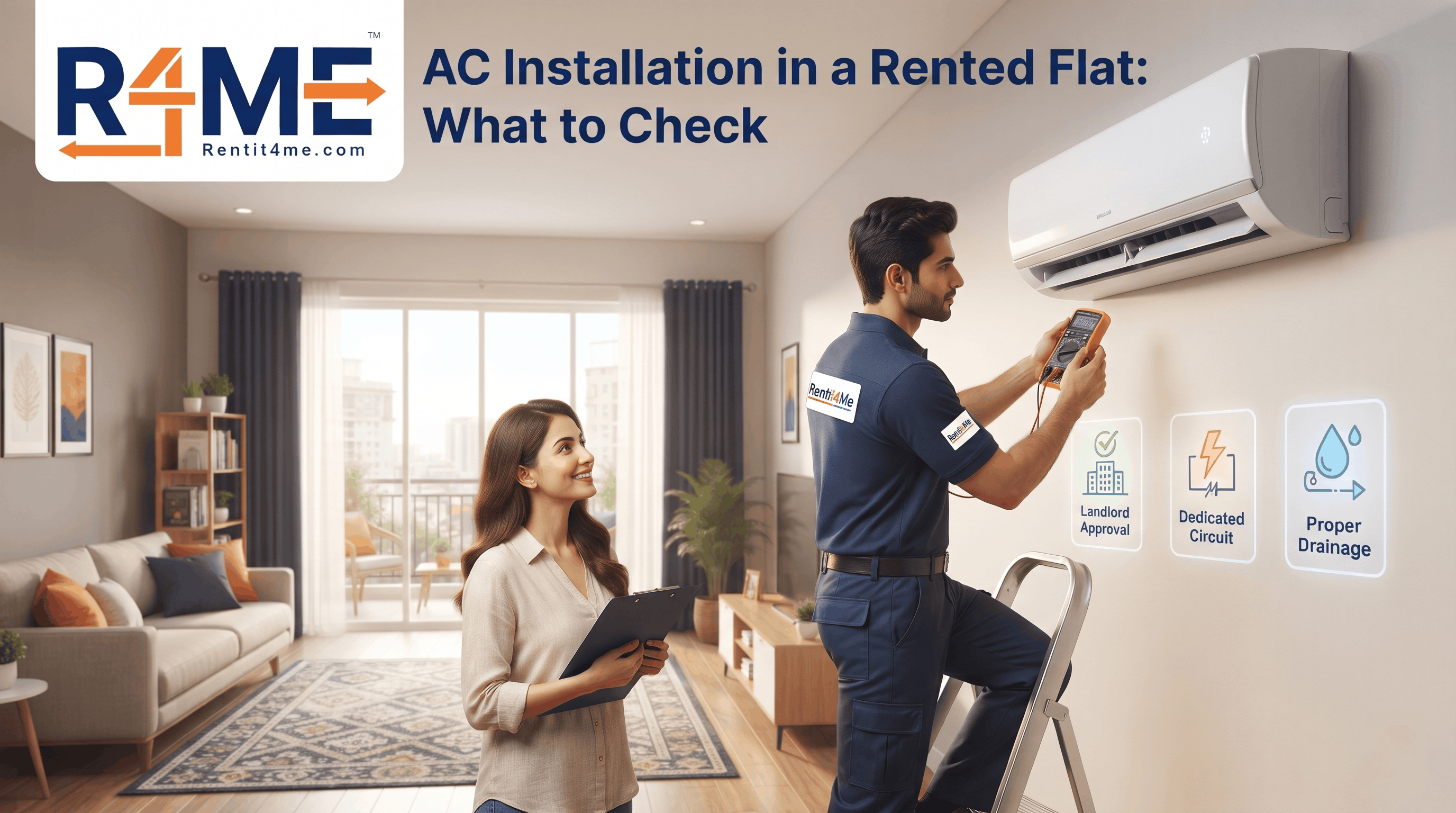
AC installation in a rented flat needs landlord consent, a safe and rated power point, a place for the outdoor unit and a route for the drain pipe. Society rules can add further limits. This guide lists what tenants should confirm before fitting an AC and what to agree in writing before the work starts.
Start with the landlord. Fitting an AC means drilling a hole through the wall and placing an outdoor unit, both of which alter the property. Ask in writing, and agree who pays for the fitting and who owns any fixed parts after you leave.
Next, check the housing society. Many buildings control where outdoor units can go and may need an approval or a fee. Facade rules are common in apartment complexes.
An AC draws a heavy current, so it needs its own socket and a suitably rated circuit breaker. Do not plug it into a shared extension board, and look for products that carry the mark described on the Bureau of Indian Standards website. Ask an electrician to check that the wire gauge, the earth connection and the breaker suit the unit's rating.
In older buildings, thin wiring is the main risk. As a result, a quick electrical check before installation avoids overheating and tripping.
The outdoor unit needs space to release heat, so it should not sit in a cramped corner. It also needs firm support, because it is heavy and vibrates. A badly placed unit loses efficiency, and a poorly fixed one can fall.
Safety matters at height. Hire fitters who work with proper brackets and safety gear, and never allow an untrained helper to lean out of a window.
The indoor unit drips water as it cools, so the drain pipe needs a steady downward slope and a safe exit. A pipe that empties onto a neighbour's balcony or a public lane causes disputes. Seal the wall hole properly to keep out insects and rain.
Discuss how the wall will be restored when you leave. A short written note about the hole saves arguments over the deposit.
Decide who owns the AC. A tenant who buys or rents a unit usually removes it at the end of the stay, while a landlord may keep a fixed unit. Agree how the removal and the wall repair will be handled, and who pays.
Short-term tenants can also consider a plan that includes fitting and removal. The guide to how to rent an AC explains the process step by step.
A short message or signed note can prevent most disputes. It should name the room, the unit and the date of fitting. It should say who pays for fitting, the wall hole and the drain pipe, and who owns the bracket and the pipework afterwards. It should also state how the wall will be restored and whether any deposit will be adjusted.
Both sides should keep a copy. A photograph of the wall before work starts and another after the fitting help later, since they show what changed. If the landlord insists on a particular fitter or location, record that choice as well.
Fitting usually takes a few hours, though the time depends on the wall and the pipe route. The fitters mark the position, drill the hole, mount the indoor unit and the outdoor bracket, connect the copper pipes and the drain, and test the cooling. Be present, because decisions about the pipe route and the unit's position are made on the spot.
Check the indoor unit for level, since a tilted unit drips onto the wall. Check that the pipe is neatly covered and the hole is sealed. Ask the fitters to show the cooling working, and keep their contact details for any fault in the first weeks.
Four problems come up often. Water dripping from the drain pipe onto a lower balcony causes complaints, so confirm the exit before the work starts. Vibration from a loose outdoor bracket can make noise through the wall.
Old wiring can trip the breaker, and the fault then looks like the AC's problem when the cause is the circuit. Finally, a hole drilled in the wrong place can hit a pipe or cable inside the wall, so ask the landlord whether the wall contains any.
Plan the exit as carefully as the entry. A tenant who owns the unit should arrange removal by a technician, who recovers the gas and caps the pipes properly. The wall hole should be sealed and painted if the agreement says so. If the landlord keeps the unit, record its condition and any servicing done, and confirm in writing that it now belongs to the landlord.
Leave time for this. Booking removal on the last day of the lease often fails, because technicians are busy and the building may restrict work hours. A week's notice is a safer plan.
Society approvals are common in Mumbai and Thane towers. In Pune and Bengaluru, independent houses and older buildings often need an electrical check first.
Yes. The wall and the building belong to the owner, so permission is needed. A landlord may agree if you cover the fitting and restore the wall at the end of the tenancy. Ask in writing and keep the reply, since a verbal yes is hard to prove.
It depends on the agreement. Tenants usually pay for fitting and removal of their own unit, and the landlord may agree to share costs for a unit that stays. Settle the point before work begins, and note it in a message or in the rent agreement.
Yes, in most cases. An AC draws a heavy current, so it should have its own socket and a correctly rated breaker, not a shared extension board. Ask an electrician to confirm the wiring, because old thin wires are a fire risk.
Sometimes. Some buildings provide a ledge, a duct or a designated rack for outdoor units, and a window-type or portable unit may suit a room with no outside wall. Ask the society and the landlord what the building allows. Do not hang a unit from a window grill without proper support, because a fall can injure people below.
Most split AC fittings take a few hours, depending on the wall, the pipe length and the access to the outdoor spot. Difficult routes or high floors take longer. Ask the fitters for an estimate when you book, and keep the afternoon free in case the work takes more time than expected.
Even with permission, a fitting affects other people. Outdoor units hum and drip, so a bracket facing a neighbour's window can cause friction. Ask whether the building has an approved spot for units, and keep the unit away from shared walkways. A short, polite word with the nearest neighbours before the work starts often prevents complaints later.
AC installation in a rented flat goes smoothly when you get the landlord's consent, check the society rules, test the power point and plan the outdoor unit and drain route. Put each agreement in writing, with dates, so that both sides know what was promised.
Before you buy or rent a unit, confirm the capacity that the room really needs. The guide to AC tonnage for room size explains how to size the unit for your room and exposure.
 Welcome to Rentit4me

