 26-Nov-2026
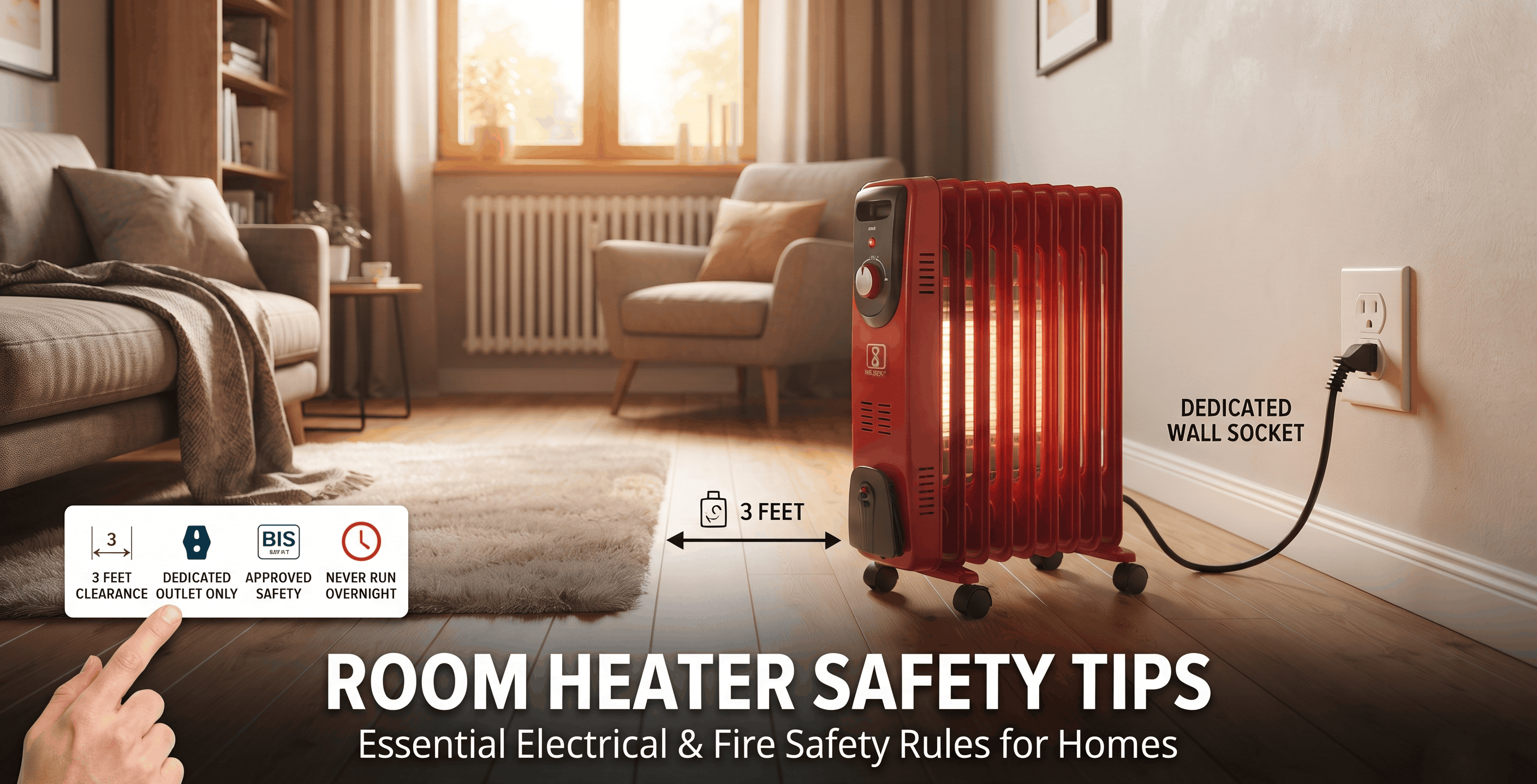
Safe heater use rests on four habits: keep three feet clear around the heater, plug it into a wall socket, never leave it running while you sleep, and avoid fuel-burning heaters indoors. These room heater safety tips apply to rented homes, and shared flats, where wiring is often old and rooms are small.
The United States Consumer Product Safety Commission estimates that portable heaters, including electric space heaters, were involved in an average of 1,600 fires a year between 2020 and 2022. Those fires caused about 70 deaths and 150 injuries annually, according to its winter safety release. Indian data is less complete, but the causes are the same everywhere: heat near fabric and overloaded wiring.
Where you put the heater matters as much as which heater you choose.
Keep the heater at least three feet (about one metre) from curtains, bedding, sofas and papers.
Place it on a hard, flat floor, not on a rug, mattress or sofa.
Keep it away from water, so never use it in a wet bathroom.
Never dry clothes or shoes on or near it.
In foggy weeks, washing does not dry outdoors, so people hang it indoors. Wet clothes near a heater scorch and can ignite. Keep drying racks well away from it.
A heater draws 1,000 to 2,000 watts, which is a heavy load for thin wiring. Plug it directly into a wall socket and avoid extension boards. If the plug or socket feels warm, switch off and ask an electrician to check the point.
Do not run a heater, geyser and iron on one line. In a rented room, ask the owner which socket can carry the load. Replace any cord that is frayed or kinked, and never run a cord under a carpet.
The Bureau of Indian Standards covers room heater safety under IS 302-2-30, including warnings such as "do not cover". Three features reduce risk in daily use:
A tip-over switch that cuts power if the heater falls.
Overheat protection that switches the element off automatically.
A thermostat that stops the heater running flat out.
An oil-filled radiator with a thermostat has a cooler surface than a bare element. However, it is still a heater, so the same placement and supervision rules apply.
The Commission advises against leaving a heater on while you sleep or when nobody is watching. A better routine is to warm the room before bed, then switch the heater off and use bedding for the night. A timer plug automates this.
Keep children and pets away from the heater, and place it where nobody can knock it over. Portable heaters can also overheat a closed room, which matters most for infants and older people.
Never burn charcoal, coal or wood in a closed room. Burning fuel releases carbon monoxide, a colourless and odourless gas. Use electric heaters only, and keep a window slightly open if you cannot avoid any other heat source.
In Delhi shared homes and student housing, one overloaded circuit puts everyone at risk, so agree who switches the heater off. Small clinics and salons in Faridabad should keep units away from fabric and chemicals. Families in Ghaziabad with elders and children should choose tip-over protection first.
Safety improves when it becomes a habit, so build a short routine for each evening. Look at the heater and the cord before you switch it on, and check that nothing has been dropped on or beside it. Feel the plug after the first half hour, and switch off if it is hot.
Before bed, warm the room with a timer, then switch the heater off and unplug it if you can. In the morning, repeat the same checks. A routine like this takes less than two minutes, and it catches loose plugs, frayed cords and misplaced laundry before they become a problem.
Some signs mean you should stop using the heater at once. A burning smell, sparks, a plug that is hot to the touch, a cord that feels soft or discoloured, and a body that is too hot to touch all point to a fault. A heater that trips the breaker repeatedly is also warning you about the wiring or the unit.
Switch the heater off, unplug it and keep it out of use until a technician has checked it. Do not try to open it yourself. For the wiring, ask an electrician to inspect the socket and the line, because a heater that is working normally can still overheat a weak point in the circuit.
Heater safety depends partly on the building. In a rented home, ask the owner which sockets can carry a heavy load and whether the circuit has a breaker. Ask whether the wiring has been checked recently, and who is responsible for repairs if a socket or switch fails.
Ask also whether a smoke alarm is fitted, since few Indian flats have one. A small battery alarm is inexpensive and gives early warning if a fire starts at night. Agree on these points in writing, particularly in shared housing where several people use heaters on the same line.
A few beliefs lead people into unsafe habits. One is that an oil-filled radiator is safe to leave on overnight because the surface is cooler. It is lower risk than a bare element, but the safety advice still says to switch heaters off before sleep. Another is that an extension board is fine if it looks heavy. Heaters draw a high current, and a board can overheat even when it appears sturdy.
A third myth is that a heater with a fan is safer than one without. Neither type is safe near curtains or bedding. The clear space around the heater matters more than the type.
Safety agencies advise against it. The U.S. Consumer Product Safety Commission recommends never leaving a heater on while you sleep. Warm the room before bed using a timer, then switch the heater off. Use bedding for warmth through the night instead.
Avoid it. Moisture damages the heater's parts and raises the risk of electric shock. Instead, warm the bathroom briefly beforehand from a dry area, and then remove the heater before anyone showers. A towel rail or a geyser-heated shower keeps the room comfortable without placing a mains appliance near water.
The circuit is probably overloaded. A heater, geyser and iron together can exceed the line's rating, and the breaker then cuts power to protect the wiring. Run the heater alone on its socket, and ask an electrician to check the wiring if the trip repeats.
No. Fabric near a heater can scorch or catch fire, especially when it is damp and heavy. Use a drying rack placed well away from the heater, in a room with some ventilation, and keep the heater's three-foot clear zone free of any cloth, towels or paper at all times.
It can be, provided that the timer is rated for the heater's load. A heater draws a high current, so a light timer may overheat. Check the amp rating on the timer, avoid cheap unrated units, and use it only to warm the room before sleep, not to run through the night.
Room heater safety tips come down to space, sockets and supervision. Keep three feet clear, plug into the wall, check the plug for warmth, and switch the heater off before you sleep.
Choose a unit with a tip-over switch, overheat protection and a thermostat, and keep children and pets away from it at all times. A few minutes of checking each evening prevents most heater accidents. If you are still choosing a heater, the guide to room heater types compares the four common designs and the rooms they suit.
 Welcome to Rentit4me

