 22-Sep-2026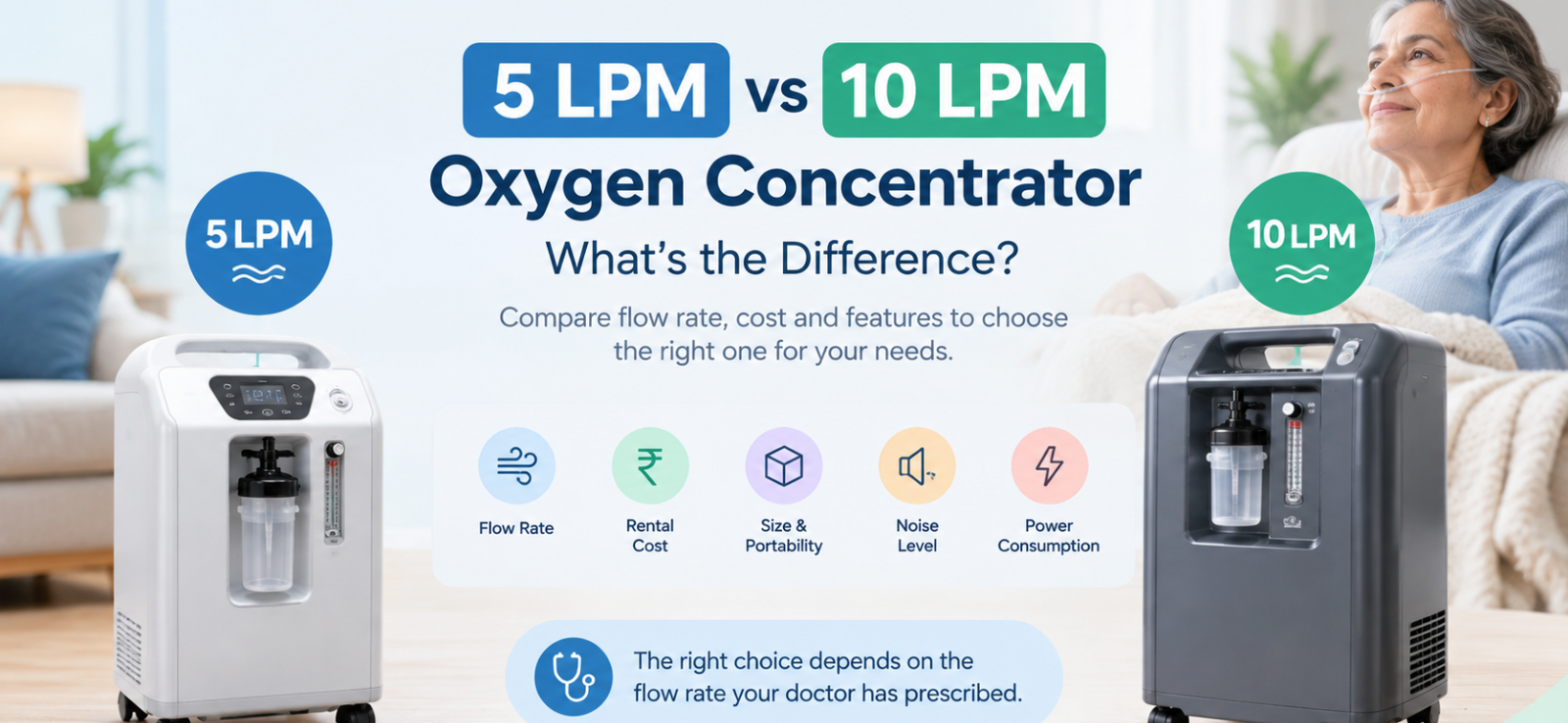
A 5 LPM oxygen concentrator covers most home oxygen therapy needs and is quieter, lighter, and generally cheaper to rent. A 10 LPM oxygen concentrator delivers up to double the maximum flow, built for patients with a higher, doctor-confirmed oxygen requirement and it typically costs meaningfully more to rent each month. The right choice comes down to the flow rate your doctor has actually prescribed, not which number sounds like the safer option.
If you've started looking into oxygen concentrators for home use, you've probably run into this exact question fairly quickly. Both 5 LPM and 10 LPM machines do the same basic job, they pull in room air and deliver concentrated oxygen through a nasal cannula or mask but they're built for different levels of need, and picking the wrong one is a more common (and avoidable) mistake than people expect.
LPM stands for litres per minute, it's simply the amount of oxygen a concentrator can deliver every minute. A 5 LPM machine can deliver up to five litres per minute; a 10 LPM machine can deliver up to ten. That's the entire technical difference between the two categories. Everything else: size, noise, power draw, rental cost follows from that one number.
A 5 LPM oxygen concentrator is the most commonly prescribed option for home oxygen therapy, and it's what most home-care situations are built around. It's generally:
This is typically the starting point for patients with mild to moderate oxygen requirements the flow level should still come from the treating doctor's assessment, not be assumed based on how the patient feels.
A 10 LPM oxygen concentrator delivers a higher maximum flow, generally intended for patients with a higher prescribed oxygen requirement often associated with more advanced respiratory conditions or oxygen needs closer to hospital-level care. Compared to a 5 LPM unit, it's usually:
Because of its higher output, a 10 LPM unit is also sometimes used in settings where flexibility for a range of flow requirements matters, such as step-down care after a hospital stay.
It's worth being direct about this: neither machine is "better" in any general sense. The right one is whichever matches what a doctor has actually prescribed for the patient, based on their condition and oxygen saturation assessment not whichever has the higher number on the box.
A genuinely common source of dissatisfaction, seen across home-oxygen providers, is choosing a machine without that confirmation first sometimes ending up with a unit that's either not sufficient for the patient's actual need, or unnecessarily large, loud, and expensive for what was actually required.

For families weighing this decision, cost is naturally a big part of it and this is where the 5 LPM vs 10 LPM choice has a real, ongoing financial impact, not just an upfront one.
Based on current market rental listings across Delhi-NCR, rental pricing generally falls into these ranges:
As a rough rule of thumb across the market, moving from a 5 LPM to a 10 LPM rental can add roughly 40–85% to the monthly cost, depending on the brand and provider. This is exactly why confirming the actual prescribed flow rate before renting matters, it's a recurring monthly cost difference, not a one-time decision.
These figures reflect general market rates and will vary by brand, provider, rental duration, and city always confirm current pricing on the specific listing rather than treating any range as fixed.
For most short-term or recovery-based situations post-hospital discharge, temporary respiratory support, or a condition still being assessed renting tends to make more sense than buying outright, regardless of which flow rate is needed. It avoids a large upfront cost for a need whose duration often isn't clear yet, and it allows the equipment to be swapped or adjusted if the prescribed flow rate changes as the patient's condition is reassessed.
A 5 LPM and a 10 LPM oxygen concentrator aren't competing products, they're built for different levels of oxygen need, and the right one is simply whichever matches the flow rate a doctor has actually prescribed. Given the real cost difference between the two, especially on a rental basis, it's worth confirming that requirement clearly before choosing. If that need is temporary or the duration is still uncertain, exploring oxygen concentrators on rent is usually a more practical starting point than committing to a purchase.
 Welcome to Rentit4me
