 15-Sep-2026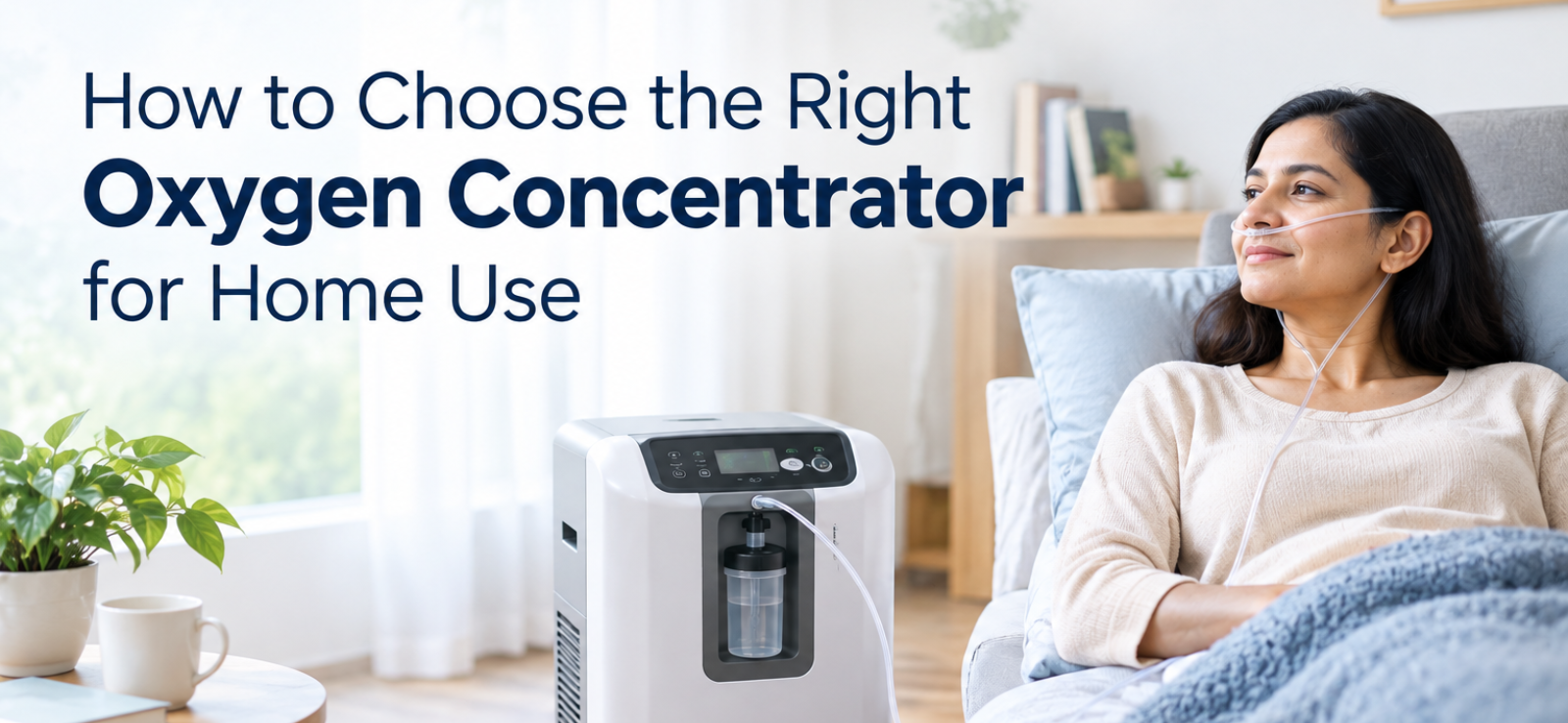
Choosing the right oxygen concentrator for home use can feel confusing, especially when different models come with different flow capacities, oxygen purity levels, delivery modes, sizes and prices. The right machine is not necessarily the biggest or most expensive one. It should match the oxygen requirement prescribed by the healthcare professional and fit the way it will be used at home.

An oxygen concentrator is a medical device that takes in air from the surrounding environment, separates oxygen from the other gases present, and delivers concentrated oxygen to the user through a nasal cannula or mask.
Unlike an oxygen cylinder, a concentrator doesn't need to be refilled. It does, however, generally require a continuous electrical power supply, which makes power availability a genuinely important part of planning for home use more on that below.
One of the first things to check is the prescribed oxygen flow rate. Flow is generally expressed in litres per minute, or LPM. The appropriate flow should be based on the requirement advised by the patient's healthcare professional. It is not a good idea to select a machine simply because it has a higher capacity.
For example, a 5 LPM oxygen concentrator and a 10 LPM oxygen concentrator are designed for different flow requirements. A higher-capacity machine is not automatically a better choice for every user.
LPM means litres per minute and refers to the amount of oxygen delivered by the device. The important point is to choose a concentrator that can support the prescribed flow consistently. The required setting may also differ depending on whether oxygen is needed during rest, activity or sleep, so the medical recommendation should always guide the selection.
Oxygen purity: Check the concentration specified by the manufacturer, and specifically at the flow rate you expect to use a headline purity figure on its own doesn't tell the full story.
Flow capacity: Confirm the machine can support the prescribed flow requirement. Choosing by capacity alone, without this check, can lead to an unsuitable decision.
Delivery mode: Confirm whether the concentrator offers continuous flow, pulse dose, or both, matched to the medical requirement.
Noise level: Worth checking specifically if the machine will run for several hours or near a sleeping area a quieter unit makes a real difference to everyday comfort.
Power consumption: Concentrators rely on electricity, and larger models generally require more of it. Check the manufacturer's rated power consumption rather than assuming all models draw the same.
Alarms and safety features: Look for alerts such as power failure, low oxygen concentration, or system fault indicators these make the device easier to monitor day to day.
Service and maintenance: As a medical device, after-sales support matters. Check how servicing, filter maintenance, troubleshooting, and replacement support are handled before choosing.
Because home oxygen concentrators generally depend on a continuous electricity supply, it's worth planning for power cuts before choosing a machine a genuinely practical consideration for many Indian households.
Depending on the equipment and the expected duration of an outage, an inverter, UPS, or another backup arrangement may be worth having in place. Check the device's actual power requirements rather than assuming every concentrator draws the same amount and if oxygen support is needed for extended periods, having a plan for interruptions is a meaningful part of preparing the home.
This decision can matter as much as the flow-rate question itself.
Renting may be practical when:
Buying may be more suitable when:
When renting, it's worth looking beyond the rental price alone the machine's condition, capacity, servicing arrangement, delivery and pickup process, rental duration, deposit requirements, and available support if something goes wrong all factor into whether it's genuinely the right fit.
Choosing an oxygen concentrator starts with understanding the actual oxygen requirement and then comparing the equipment around it. Flow capacity, delivery mode, oxygen purity, portability, power consumption, noise and service support all matter when selecting equipment for home use.
For short-term or temporary requirements, rent an oxygen concentrator can be a practical alternative to purchasing equipment outright. Rentit4Me brings rental options together in one marketplace, helping users explore medical equipment based on their requirements and availability.
 Welcome to Rentit4me
