 25-Sep-2026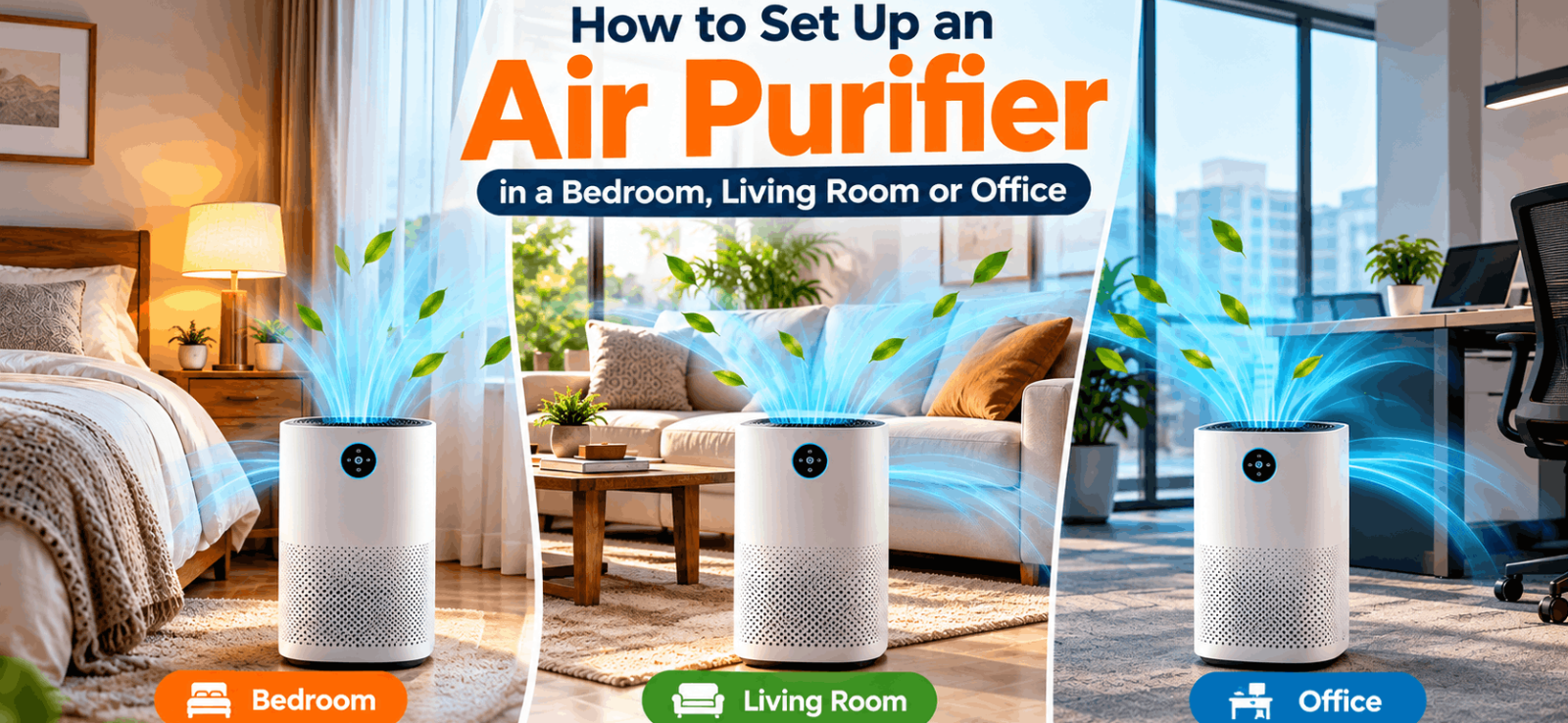
An air purifier can be a useful addition to indoor spaces where people spend several hours each day, but choosing the right machine is only part of the process. Where the purifier is placed, how much space it is expected to cover, and how consistently it is operated can all affect how effectively it filters airborne particles.
Whether it is being used in a bedroom, living room or office, a few simple setup decisions can make the device more practical and easier to use. For people who are unsure about buying an air purifier for occasional or seasonal use, an air purifier on rent can also provide a flexible way to use the equipment for a defined period without making a full upfront purchase.
The first step is understanding the area the air purifier actually needs to cover. Portable air cleaners are generally rated for a specific coverage area, and CADR (Clean Air Delivery Rate) is the key spec to compare across models. A higher CADR generally means the unit can deliver filtered air at a higher rate, making it suitable for a larger space.
Measure the room's length and width and compare that area against the manufacturer's recommended coverage. Open-plan rooms need more consideration, since the purifier may effectively be serving a combined space rather than one enclosed room and higher ceilings mean more air volume to circulate. This is why a compact unit built for a bedroom shouldn't automatically be expected to perform the same way in a large living room or office.

For a bedroom, the simplest approach is placing the purifier somewhere its intake and outlet aren't blocked. Avoid tucking it behind curtains, wedging it between furniture, or pushing it into a corner where airflow is restricted. The EPA recommends positioning portable air cleaners where people actually spend the most time, while keeping the airflow path clear.
A practical bedroom setup looks like this:
If you're specifically looking at an air purifier on rent for a bedroom, checking the model's recommended room size before booking matters even more than usual a compact unit suits a smaller bedroom, while a larger room needs a purifier with genuinely higher airflow capacity.
The living room is often the busiest room in the house, which makes placement more important, not less. Rather than defaulting to a wall or a decorative corner, think about where people actually spend their time. The unit needs enough open space around it to draw in room air and push out filtered air without furniture or curtains getting in the way.
The same principle applies when choosing an air purifier rental: don't pick a unit based on the lowest monthly rental price alone. Compare room size, CADR, and filtration specs against the space it'll actually be filtering.
Office environments come with different demands than a bedroom or living room larger floor areas, multiple occupants, printers and other equipment all affect airflow conditions. Place the purifier where it can circulate air through the occupied space without being blocked by desks, cabinets, or other equipment. The same EPA guidance applies here: don't let walls, furniture, or curtains block the intake or outlet.
For a temporary office, a startup workspace, or a short-term project, an air purifier on rent is worth considering instead of purchasing equipment you won't need permanently.
An air purifier isn't a substitute for proper ventilation. How effectively a portable air cleaner filters a specific room depends partly on how outdoor air enters that space. EPA guidance notes portable air cleaners are generally more effective in a room when exterior doors and windows stay closed, while CDC guidance frames filtration as one part of a broader indoor-air-quality approach that also includes ventilation.
That doesn't mean sealing every opening permanently, it means factoring in outdoor conditions, the building's ventilation system, and how the room is actually used.
A handful of simple mistakes quietly reduce how useful a purifier actually is:
The answer largely comes down to how long and how often you'll actually use it.
Buying tends to make sense for households expecting to use the same equipment for a long stretch of time. Renting is worth considering for seasonal needs, temporary accommodation, short-term office setups, or simply wanting flexibility without committing to a permanent purchase.
Rental platforms such as Rentit4me list air purifier models across different room-size categories, making it easier to compare specifications and rental periods against your actual requirement. Current listings span smaller models for roughly 200–300 square feet, medium models around 500 square feet, and larger units built for spaces approaching 1,000 square feet.
Setting up an air purifier correctly does not have to be complicated. Start by matching the purifier to the room size, pay attention to CADR and filtration specifications, place the unit where airflow remains unobstructed, and follow the manufacturer's maintenance instructions.
Whether it is an air purifier for a bedroom, an air purifier for a living room, or an air purifier for an office, the right setup can make the device easier to use and better suited to the space. For people who need filtration for a specific season or temporary period, an air purifier on rent can also be a practical alternative to purchasing a new unit, particularly when room size, rental duration and maintenance support are taken into account.
 Welcome to Rentit4me
